
TRIAL OF THE CHICAGO 7: Don’t Be Stopped From Speaking Out
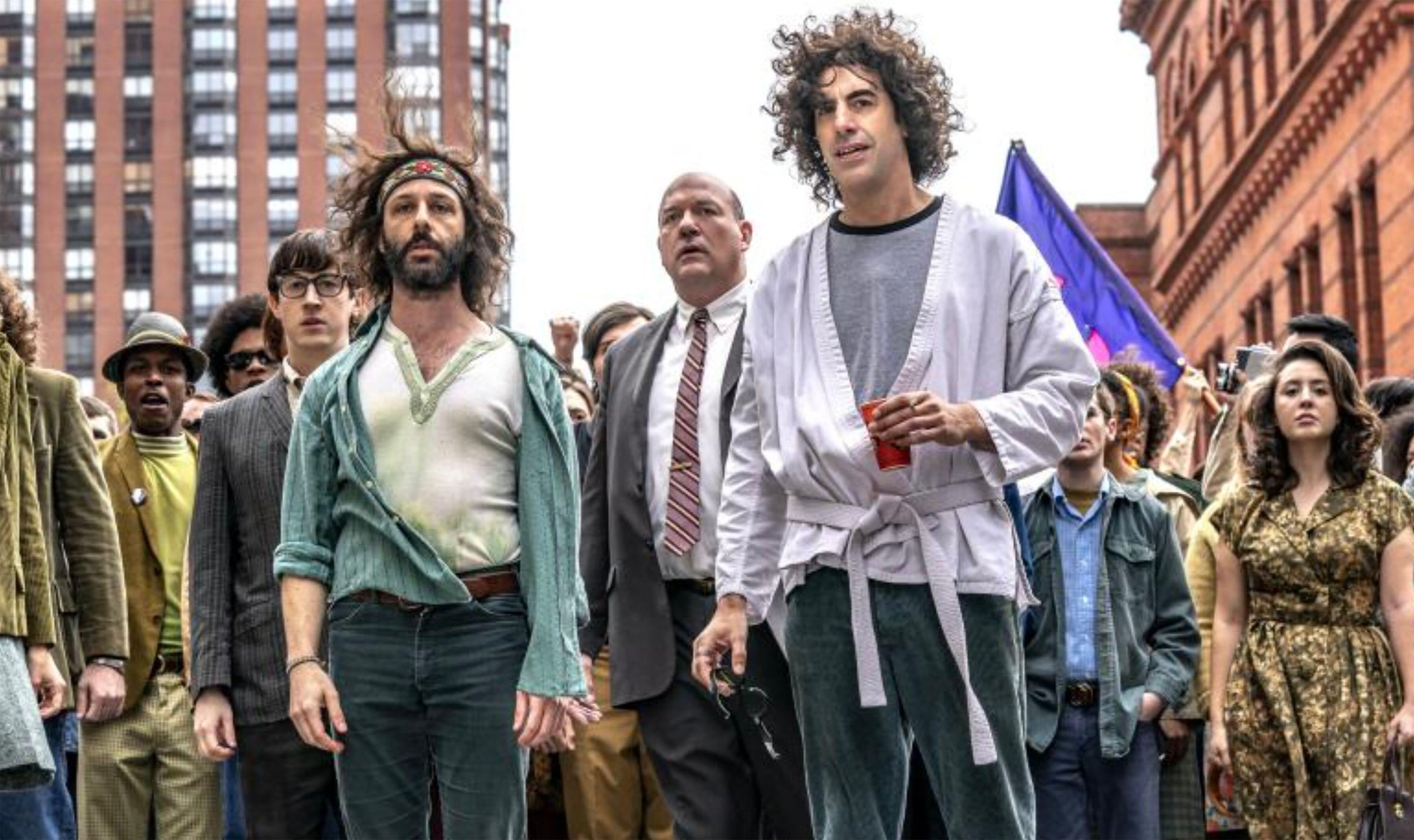
The horror of Bobby Seale’s gagging by Judge Julius Hoffman in Aaron Sorkin’s timely film The Trial of the Chicago 7 is an image of what Black Lives Matter is fighting against. It’s an image of how being silenced provokes rage.
The history and trial speak for themselves. But as a psychoanalyst, I can talk about how personal “historical forces” in your mind sometimes create a violent opposition to speaking out, thinking for yourself, and being who you are. You — any of us — can feel we’re on trial for our thoughts if we go against what we’ve been taught we “should” (or “should not”) think and believe.
So, how do you not get stopped from speaking out? We can learn a lot from the Chicago 8 about what it takes to stand up against forces that want to shut us down.
The defendants in The Trial of the Chicago 7 — Tom Hayden (Eddie Redmayne) and Rennie Davis (Alex Sharp) of SDS; Dave Dellinger (John Carroll Lynch) of the National Mobilization Committee to End the War in Vietnam (MOBE); Abbie Hoffman (Sacha Baron Cohen) and Jerry Rubin (Jeremy Strong) of the Yippies; Jon Froines (Danny Flaherty), Lee Weiner (Noah Robbins); along with Bobby Seale (Yahya Abdul-Mateen II) of the Black Panthers — might have disagreed on a number of things.
But together, they were a force of unity, standing up against being silenced about the wrongs of the Vietnam War. And in 1968, they all crossed state borders with ideas — not machine guns — to protest at the Chicago Democratic Convention.
What The Trial of the Chicago 7 (8) Teaches Us
Despite Mayor Daley’s refusal (through his pawn, David Stahl, played by Steve Routman) to issue permits for peaceful protest, the Chicago 8 did not back down.
Do you need the courage of the Chicago 8 to stand up against those old-guard forces in your mind — not unlike Daley and Stahl — that tell you: “No. Be quiet. Stay in your box”?
The Trial of the Chicago 7 (8) has a lot to teach us about finding the courage to break free.
Some of the sequences in the film have been factually disputed. To honor Aaron Sorkin’s vision, I’ll refer to the partially fictionalized version we see onscreen.
Old (Internal) Forces That Try to Gag You
Your personal history can make speaking out or thinking for yourself very difficult. Many things might conspire to silence you — a parent, painful social experiences, your own fears.
After Fred Hampton, head of the Chicago Black Panthers, is executed, Bobby Seale asks Tom Hayden an interesting question about himself and the other white activists:
“You all had the same father, right? ‘Cut your hair, respect authority, respect America, respect me.’
Your life is a ‘fuck you’ to your father, right? A little?”
Tom replies: “Maybe.”
Bobby goes on:
“And you can see how that’s different from a rope on a tree?”
It’s harder to stand up to truly hateful forces, to any kind of abuse. Standing up to parents when you need their love and fear losing it isn’t easy either. When you grow up with certain “rules” or societal attitudes, they become insistent voices in your mind.
Those voices aren’t easy to defy or shake. In fact, they can gag you — even when you’re angry and need to speak up.
It’s important to break free. We see that in Bobby Seale when he screams in the courtroom:
“Fred Hampton was assassinated last night. It was premeditated murder.”
This, after the judge tries to “strongly caution” him into silence.
For expressing his completely understandable outrage, Bobby is beaten and chained by marshals and brought back into the courtroom with a large gag over his mouth — an example meant to warn: Don’t defy authority.
We have judges in our heads, too, that gag us when we try to speak our minds.
Twisting Truth Stops You from Speaking Out
Being gagged, threatened, or frightened by those old internal “authorities” gives you two choices:
Shut up and don’t step out of line
Or refuse to listen, like Bobby Seale in The Trial of the Chicago 7
There are many “methods” that can intimidate you. We see some of them in the film.
One is twisting the truth — even using your own words or feelings against you to create doubt.
We see this when Tom Hayden is blamed for starting the Chicago riots. The prosecution uses his words:
“If there’s going to be blood, let them see blood all over the city.”
What Tom meant was, “Let them see our blood…” — that protesters would face police violence if they had to, not that he wanted violence or bloodshed.
Another example: letters sent to jurors 6 and 11: “We are watching you,” signed “The Panthers.”
It’s a twisted version of “The whole world is watching,” the protesters’ own chant.
“Black Panthers don’t write letters any more than the mob does,” William Kunstler (Mark Rylance), the Chicago 7’s outraged defense attorney, protests.
Manipulating truth is one powerful way to try to stop you. You need people like Kunstler — people who see reality clearly and back you up — so you don’t get scared and then “club,” judge, and berate yourself into silence.
Internal “Guns” Pointed at You
It’s rare to grow up without a set of “shoulds,” rules about how you’re supposed to be. We soak them in from parents, teachers, religious or cultural communities, and friends we want to emulate.
“I should be like this or that…” becomes a running internal dialogue. You may want to speak freely, to protest, to live your truth — but those rules feel like a wall.
The fight in your mind can feel no different from being dropped into the “police state” Walter Cronkite called Chicago during the August 1968 convention. When you try to speak up, it can feel like facing a line of police with guns drawn — like the ones coming at the protesters, clubbing and beating them back.
It’s crucial to have your voice. As Abbie Hoffman says:
“You know when shit happens? When you don’t give protesters a place to go.”
We all need “a place to go” — and people who will listen. If we don’t have that, it creates a war, both inside us and out in the world. When you’re constantly told, “Be quiet. Sit down!” as Judge Hoffman orders Kunstler and Seale, nothing can change.
Finding Some Courage Like “Ramsey Clark”
Ramsey Clark (Michael Keaton) is the Chicago 7’s star witness. But it takes real courage to speak out when forces are standing right in front of you, trying to shut you up — like the Justice Department officials in his office:
“It’s against the law to testify, Ramsey.”
Tom Hayden tells him:
“You have to find some courage — now.”
So Clark turns to the officials:
“It’s General Clark — and arrest me or shut the fuck up.”
Then to Tom: “Found some.”
He testifies to the truth:
“An investigation concluded that the riots were started by the Chicago Police. There was no conspiracy by the defendants.”
The judge doesn’t allow this testimony into the official record. But the fact remains: he spoke the truth anyway.
Don’t let anyone — external or internal — silence you.
Don’t Be Quiet — Your Life Depends on It
It may feel like a revolution inside you to speak out about what you believe. But remember what Abbie Hoffman says when asked his price to “call off the revolution”:
“My life.”
Your voice is your life. Don’t let anyone or anything silence you.
You have a right to your thoughts, beliefs, and ideas. As Abbie also says:
“We had certain ideas and for that we were gassed, beaten, arrested, and put on trial.”
Being on trial for your thoughts — as the Chicago 7 (8) were — or for the color of your skin is enraging.
Use that rage well, like Tom Hayden at the end of The Trial of the Chicago 7. He defies Judge Hoffman’s instructions to be “respectful, show remorse, and be brief.” Instead, he stands up and does it his way:
“Since this trial began, 4,752 troops have been killed in Vietnam, and the following are their names…”
The helpless judge pounds his gavel. Tom Hayden does not stop.
Don’t listen to the judge in your head who spouts old rules and tries to stop you.
Now’s the time to find some courage.
Stand up for your own truth.
Take back your voice.