
SUMMER WITH MONIKA: Fantasy Love Doesn’t Solve Trauma
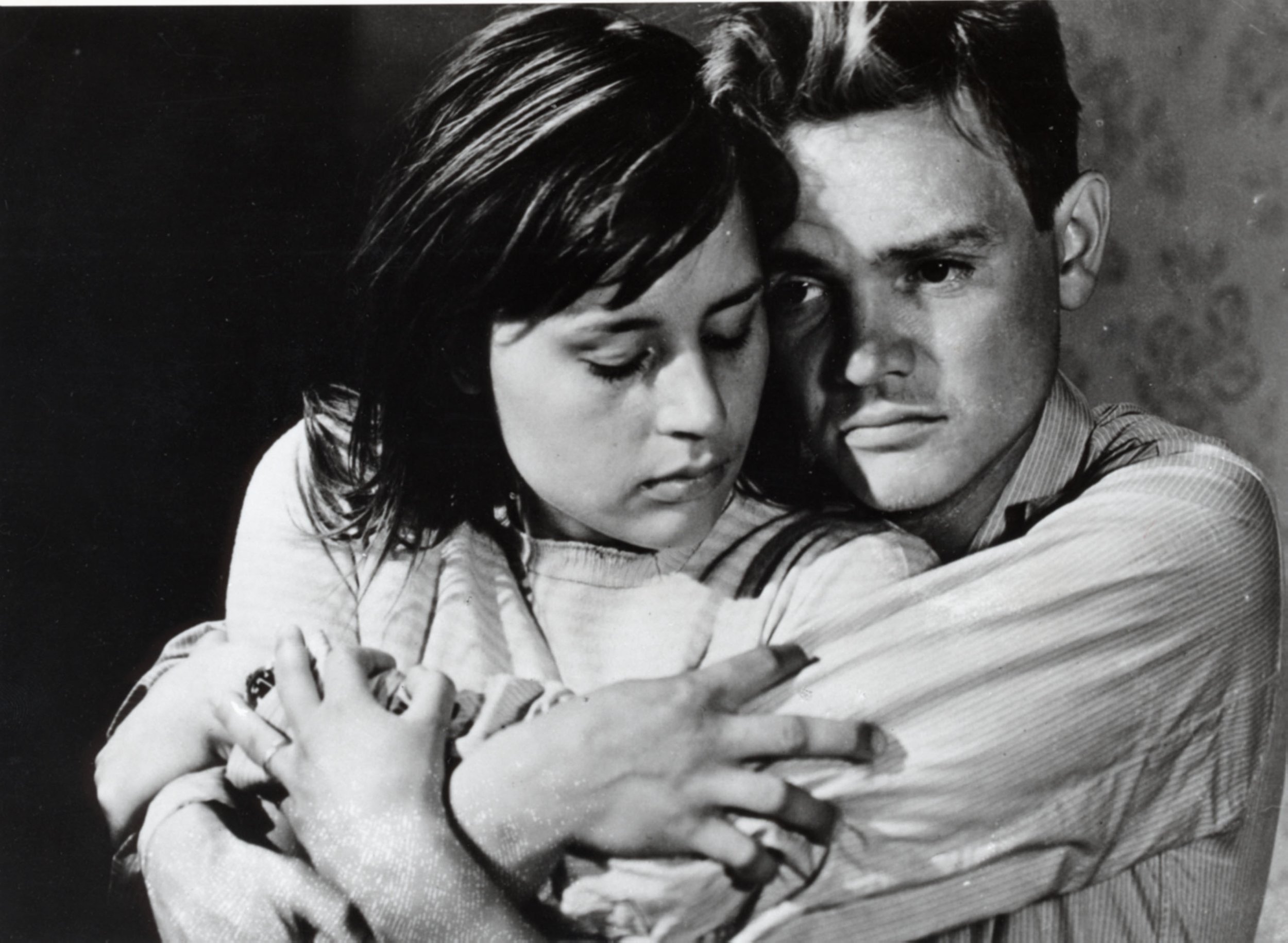
Summer love on a deserted island isn’t real life. That’s the Gordian knot that ties the hearts of Monika and Harry in Ingmar Bergman’s 1953 Summer with Monika. Erotic and heartbreaking, we watch two teenagers caught in the throes of an idyllic love. It’s a love they both long for, given their troubled, sad early lives. But it’s also an escape from life’s cruelties and realities, which they can’t really avoid. Yes. What you bring from childhood complicates love, sometimes more, sometimes less. And, in his films, Bergman wove personal themes of longing, fantasy, absence, loneliness, humiliation, rage, jealousy, triangles, and infidelity. In Summer with Monika, you’ll see how an inability to accept love’s truths and imperfections ruins a chance for real love to unfold …
When Love Hurts You
Love is tricky when you’ve had childhood losses. Dead or unreachable mothers. Deprivations. Criticisms. Abuse. Too many siblings. Or. A depressed or drunken father. Those situations can confuse what real love looks like. Or whether love will stay. So, later in life, your early trauma might create a fantasy of idyllic summer love ... which doesn’t only consume you in summer.
That’s what happens to Monika and Harry. Harry’s (Lars Ekborg) mom died when he was eight years old. This loss attracts him to Monika’s (Harriet Andersson) seductions (and her fantasies of marriage and forever togetherness). Harry doesn’t want to lose love again. So. It is childhood reality, the trauma of it, that both (yet especially Monika) are driven to escape. Monika tries to run from her early reality to save herself: From her inebriated father’s physical abuse. From life in the poverty of her family’s cramped tenement flat, where she sleeps in the main room with her younger siblings. Monika was the first. Now she’s been displaced. And. She defiantly reclines to smoke, infuriating her mother. She’s jealous of the attention to a small sibling in a bed next to hers. Her painful home life makes the journey with Harry to an archipelago seem all the more freeing. Yet, there’s no freedom there. Trauma lives inside. Fantasy is never a real solution. Neither is Monika’s defiance, more desperate than Harry’s and, as we’ll see in black and white, more persistent.
No, defiance isn’t the answer. Nor is an addiction to infidelity, which is part of Monika’s later rebelliousness. Nor is running away from emotional need. From her child-self. Or from its very real hunger. Monika wants to be free, but she isn’t - not from the guilt, shame, hurt, or horror. Yes. Monika wants to be free of those awful feelings. And what Harry has to offer, the fantasy of it, looks like the perfect way out. Of course, it’s not. And Summer with Monika begins and ends with humiliation. Starting with being a pushed-aside, abused child with too many siblings in the way. Ending in her confused, self-hating attempt to “be happier,” while reliving her past, all the same.
A perfect summer love doesn’t exist. Reality always shows its face. Sooner. Or later ...
Two Dreary Lives
The sun rises. Breaking through the fog of a gray day in Stockholm. On the port, ships do their work. A fog horn blows. Seagulls fly overhead. They squeal and coo. In tandem, we listen to the harbor noises. Hear street traffic. Watch. Men tip their hats in the working-class part of the city.
Monika looks, admiringly, at herself in a mirror. She wiggles her hips. Straightens and pulls down her tight skirt. She’s on her way - to where? The camera pans. Monika sits in a diner. Her back to Harry. A stranger still, but not for long. As. Monika turns towards him. A calculated turn. She asks him for a match. This is no innocent encounter. With every move, Monika has a motive up her sleeve. Hungry for the attention a neglected and slapped-around girl doesn’t get at home.
Harry, in stark contrast to Monika’s brazen adolescent seductiveness, is shy and reserved. He needs to be drawn out of a shell he’s been locked into since his mom died, and his dad withdrew into silence. And to make him feel worse? He can do nothing right at work. He’s barely 19, and his life is hard, in its own ways. Monika, flirtatious and bold, already has the fantasy of traveling the world with him, a fantasy of escape. She senses he’s a moldable kid, just as hungry for love as she is. So. Easily, she gets Harry to invite her out to a movie: Dream Girl: A film about impossible love.
Deprived. Fantasy-Driven. Demanding.
That’s Monika. She’s just 18. A combination of erotic desire and childlike desperation. At the pub, she asks Harry if he’s noticed that spring is here, quickly interjecting, “Let’s go away and never come back.” Her invitation to a stranger is infused with the fantasy Summer plays out with Monika. Monika, running from the realities of her deprived, abusive, jealousy-inspiring childhood (and from a sexually harassing work situation), has been living in this fantasy for a very long time. She’s lost in the movies, in becoming a star herself, in the movie she’s directing with Harry:
“You may kiss me now, Harry,” Monika says dramatically. Knowing nothing of love. Her life is hard. Her siblings tease her: “Chubby tubby Nika.” She’s beautiful and enticing - and men at work think nothing of pinching her, touching her breasts, propositioning her. Calling her a “floozy.” They treat her roughly, sexually accost her, laugh at her, and make her cry. Monika envies what other people have. She lives in tenement housing, with too many younger siblings, three in all, a harsh mother, and a drunk, disparaging dad. Monika’s mom is too distracted and frustrated to give Monika the attention she needs. So. She must look elsewhere. And then: along comes Harry.
Harry’s a sweet boy, not crude like Lelle (John Harryson), from her seedy neighborhood. Before the movie, Harry takes her to eat at his house (much nicer than hers): “It’s almost like we’re married,” says the fantasy-driven Monika. Harry is entranced: “There’s no one but you, Monika.” He buys her silk stockings (a girl who hungers for fine things she’s never had), and feels the softness of her leg: “It’s your leg now, Harry; you can keep all of me. I refuse to leave.” He wants her. But what is he in for? Because. Under Monika’s erotically laced little-girl longing is a cold, harsh, demanding girl who will have her way no matter what. Their romance hides it, but it’s there from the start, as she inserts her way into Harry’s life. Monika’s script must be followed. Harry is Monika’s way out of her tormenting family life. And that must happen. No matter what.
So. One night, already “going steady,” Monika’s dad is drunk, and she confronts him about his drinking. He calls her a sassy brat, and she yells back: “I won’t be a burden to you much longer. Drink all you want. I’m not staying here.” She packs a suitcase and runs hysterically to Harry’s house. He can’t let her in; his dad is there. But she refuses to go home, and Harry must find a way to take care of her if he wants to keep her. And. Harry is as lonely and hungry as Monika. They’re well-matched, born of dissimilar deprivations. But. Deprivations of love, nonetheless.
Lonely. Yearning. Quietly Sad.
That’s Harry. A dreamy boy. Lost in fantasy for his own reasons. His mom got sick when he was only five. His dad withdrew into silence and shut down completely (a familiar form of absence in Bergman’s world). An unreachable dad. They sit together. But his dad never says a word. Harry’s sleepy vagueness is his escape. A kind of dissociation. He’s never had anyone, except a kindly, well-meaning but very brusque aunt. And his absent dad, quiet and sickly with stomach ailments, is often away for treatments. So. Harry retreats into a place, somewhere else, in his mind. Like Monika, his work-a-day world is cruel. He can’t satisfy his bosses. He tries. Really hard. But nothing he does is right. They’re mad and critical, constantly yelling. Harry apologizes, always trying to please. That is, until Monika’s beguiling fantasy of a summer love-fest takes hold of him and draws him in. He finally gets angry. Walks out the door. Never to return.
After their first kiss, Monika tells Harry: “I’m crazy about you. There’s no one but you. Only you.” She’s a needy girl who wants permanent love. “Just the two of us.” Not intruded upon by other hungry mouths. Harry wants that too. To have someone there. Loving him. Always by his side. Yet, when Harry walks Monika home, he’s beaten up by Lelle, her jealous, now-ex-lover. Monika ignores Lelle, currently of no use to her. She’s replaced him (for the time being) with someone- with Harry- who serves the purpose of getting her away from the life that Lelle is trapped in too.
“Let’s go away, Harry, forget about all those bastards trying to hold us back, making us grovel. Let’s leave this minute.” These are Monika’s words. But in Harry’s anger at the cruelty life has inflicted on him, they speak for him too. Stealing his dad’s boat, the two lovers launch their escape …
Escape into “Idyllic Love”
Bells chime. Birds chirp. A train crosses a bridge. Harry steers the hijacked boat out of Stockholm. Leaving the jackhammers and foghorns far behind for a haven on a remote shore. The next morning, asleep in the cabin beneath the boat’s hull, Monika awakes with a smile. In her tight sweater, barefoot, with skimpy white shorts, she scurries over rocks. Down to the sea. To the grassy shore. Deserted except for the two of them. Alone. For now. Bergman’s camera follows as Monika prances, runs, washes her body in a pool, and figures out how to make morning coffee (clever girl!) on the camp stove. It’s their first morning out at sea on an archipelago off Stockholm’s shores. Having escaped work and family woes. Harry sleeps while Monika makes their breakfast, “playing house.” Waking with a start, Harry thinks he’s late for work. But. Then he realizes, with a relaxed smile, that he is free. For now. At least. The two of them are happily immersed in love.
Harry, newer at love and defiance, is taken in by Monika’s blend of girlish and erotic charms: “We’ve rebelled, Monika!” She, who knows rebellion well, says to him: “Remember the story we read last night, “Outlaw Lover?” Harry beats his chest. The two of them jump up and down. Screaming like Indians. Playing as little kids do. Yet, nothing in Summer with Monika is a child’s fun and games. Although they may not know it, these two innocents are messing with fire.
Faces close up. In a camera frame. Sharing a cigarette. The two of them kiss tenderly. But too soon comes a first hint of things not so idyllic: “My, I’ve grown tubby.” “Chubby, tubby, Nika,” her siblings called her. Monika’s a “sex pot” and a gum-chewing kid in pigtails. She’s torn between a needy little girl and an alluring vamp. Harry’s always been lonely. But. Now. He imagines he’s not. The two of them are lost in fantasy. Not only of an idyllic summer love, but a future together.
Monika lies topless. Harry touches her lovingly. She runs off. And the camera follows her naked behind as she slips into a pool of water to bathe. Later, giddily singing, “La la la,” the two lovers putter off to a little village. Monika tells Harry it doesn’t matter that he can’t dance: “You’re the sweetest of them all, Harry.” But trouble is brewing in paradise. Lelle is at the dance, too near their private archipelago. Monika, with a brusque “You’re crazy,” lies to Harry, saying it isn’t Lelle.
Triangles Aren’t Idyllic
No. There’s not only the threat of Lelle that creates a triangle intruding on just the two of us. “Baby makes three.” Monika’s chubby tummy is “a pregnant one.” At first, her resentment of “the kid” is hidden. But. Remember. Monika is sick of those “sibling brats” who take everything from her. So. The conflict between reality and Monika’s needs intrudes again. Harry plays the part of reality while Monika holds on tight to their idyllic love fantasy. A fantasy she refuses to leave.
“Monika, we have to make something real of our lives. We’ll care for each other. I’ll study, get a job, become an engineer, so we can get married and have a nice house.” Harry, the realistic one, wants to give Monika proper food. Even if it’s not just the two of us: “We’ll always stay together.” Harry needs permanence; someone to count on. Never again to repeat the loss of his mom. But. Monika says no. Still wants to defy reality: “I’m not going back. I want the summer to go on just like this.” Monika doesn’t want intruders (unless she chooses one). Monika can’t share. Or lose control. Or have anything taken away. She’s still a hungry kid. Not close to being an adult. Her greed is born out of deprivation and siblings invading the “just you and me” with her mom.
“Just the two of us.” Monika sunbathes on the hood of the boat in Summer with Monika’s erotically famous photo. As she teaches Harry the two-step on a different shore, they dance blissfully oblivious to any intruders. Yet, there are intruders. A baby and Lelle. Growing up too fast when you aren’t ready throws more than a few emotional curveballs. And here they are ...
Hard Feelings Intrude
Jealousy. Possessiveness. Greed. Fear of starvation. These feelings begin to interfere with Harry and Monika’s love. Both are deprived, lonely kids. Fighting hard to get the love they desperately need. But. Now. A baby has ransacked, disrupted, and set fire to their love boat. Just as Monika’s old boyfriend, Lelle, actually does when they’re away at the dance. Reminding them they aren’t alone. It’s not just the two of us any longer. And. Intense feelings seethe right below the surface.
The boat raid is an omen of what’s already happening to Monika and Harry’s “blissful” escape. Triangles are everywhere: the baby, Monika, and Harry. Lelle, who won’t leave Monika and Harry alone, creates another third. (Later, Monika uses Lelle to make Harry jealous, when she believes he refuses to give her enough. But, for this moment, still territorial of their two-ness, Monika and Harry are high on their victory over “the intruder.” Loudly singing “La La La,” again. Realities are realities, though. They’re starving. Foraging for mushrooms. For whatever grows wild on an island far away from shore. Love can’t feed all hungers. Monika begins to complain. Yell like a shrew. Make demands. Until she goes over the edge. Abusing Harry. Insulting and humiliating him. Telling him he’s a coward for wanting to forage in the dark for food at a nearby house.
They fight. Harry, trying to talk sense and comfort her, tells Monika they can’t go on like this. They must get married. He needs a job to support them. Monika screams like a banshee: “I don’t want to go back; I don’t want to do anything. Harry, why do some people have all the luck while others are miserable?” (This is the opposite of her happily married fantasy). Yet, Monika is more than starving. She breaks into the house. Now, she’s the intruder, stealing an entire roast. The family is not unkind to her. Sure, they call the police. But they see her starvation and offer a meal. Monika aggressively refuses to take the food. Needing help humiliates her. From Harry, too.
Realities of Hunger & Need
Letting herself feel any real need makes Monika far too vulnerable. She rages at Harry. Blaming him for everything, just like his old bosses. Harry can’t do anything right. With all her wild hunger and fears unleashed, Monika becomes the unsatisfied, deprived (even depraved) child to whom no one pays sufficient attention. A child who has to scavenge alone for the bits she gets, and is bitter and spiteful because of it. Monika screams and yells at Harry: “I have no clothes or food.” Harry tries to comfort her. But in Monika’s mind, he’s become her incompetent, neglectful parents. Well, she’ll look elsewhere for what she needs. She’s done it before. Her rage is a dire warning, especially when reality hits full force. Harry insists that they must go home, and Monika becomes more hysterical: “I’m not! I won’t!” Nothing satisfies her. Except for the idyllic fantasy, she won’t give up. Monika can think only of herself. Harry tries harder to appease her, but there’s no placating Monika. He’s become the enemy of her needs. Of all her old dammed-up hunger of childhood …
But the real interloper is reality. Reality, for Monika, ruins her idyllic fantasy of love. And she’ll take Harry down with her. Her tantrums foretell the death of hope for them. There’s no going back. Although Harry gently says, “We have each other,” their summer dream is ending. As their boat motors into Stockholm’s shores, they both look sad. But Harry, who has “something to work for now,” says, “We had a lovely summer, but everything changes starting today.” Change is the devil’s prison for Monika. She wants no change. No change at all. For her, this change is a trap.
Monika’s Dammed-Up Hunger
The music, as they motor into the city (Harry determined, Monika miserable), sings a melody of doom. Yet, they marry (what else can they do?) with the help of Harry’s aunt. Harry is insistent that he will take care of Monika and build a good life. Monika wants care, but she’s a child herself, and in no condition to be a mom. “Little Monika” is born (or June, a much “prettier name,” is what Monika prefers). “Little Monika” reflects Harry’s adoration and hope. Rejection of this endearment shows the self-hate brewing under Monika’s loud, selfish, raging resentments. Harry looks into the nursery window, first a proud young father. Then a shadow of terror crosses his face. He knows what’s coming. Monika rejects June. Calls her “the kid.” Hates the baby’s presence. Won’t care for her. And the trap is? Baby June’s needs for care get in the way of Monika’s own.
And Monika’s needs are demanding, angry, unreasonable, and entitled. As Harry works hard to get ahead, to make a better life for the three of them, even finding a job where he’s respected by his boss and treated kindly, Monika’s mood worsens. The realities of Stockholm, married life, motherhood at 18, and especially Harry’s busyness send Monika into more rages. She feels left all alone, robbed of “just the two of us.” June is “not her baby.” She’s a little sibling who takes her already inattentive, critical, and abusive parents even more away from her, sending her into deprivation and starvation. June’s needs stir up Monika’s (not-so) dammed-up childhood hunger.
Unable to see what Harry is doing for her and the baby, she’s convinced that Harry is another person who has failed her. Nothing he does is enough. Monika spews ridicule and rage: “We can’t even go to the flicks, but I have no clothes anyway … We live like pigs.” She refuses to do anything. His aunt cares for the baby during the day. Harry, exhausted but remaining stoic, tenderly comforts the crying baby at night while Monika goes back to sleep, refusing to feed her. If Monika can’t be fed, no one else will. She takes out old, unsatisfied hunger on her innocent child and Harry. No. Her baby won’t have a mother’s love either. Lying to Harry’s aunt that she has a job, the aunt takes baby June so Harry can go on a business trip. Getting ready to leave and faced with her constant accusations that he’s never enough, an exasperated Harry reminds her to pay the rent.
But. With the rent money, Monika buys a new suit instead. Yelling, “You got me pregnant. I’m ugly now.” Monika wants anything that will make her feel wanted again. And the next thing we see, she’s at a bar, putting a song on the jukebox, as a man’s face bends close, lighting her cigarette with his. Monika’s up to her seductive tricks. But this time, not so carefree. The camera stops on her face. She turns and stares straight at us, in that now-famous shot. Monika’s face, full of revolt.
Dammed Up Hunger Ruins Love
Childhood trauma lives on. And. Monika was starved in childhood. All she can see is Harry failing to give her what she needs. She’s still too hungry. That’s what can happen when you’ve had to push aside your hunger. When you’ve dammed it up because there was no one there, no one who noticed, no one who cared about your needs. Now that hunger is unleashed. And Monika’s determined to get that hunger satisfied at all costs. Her baby’s needs. Harry’s real love for her. None of it matters. Only her hunger. The hunger that drove her into an idyllic summer fantasy. Monika’s in the thick of old childhood grievances and deprivations. And. She can’t see through the fog they create. These not-so-long-ago resentments ruin the love she and Harry could have.
So. She’ll get back at him for leaving her alone. Starving her. Yes. She’ll make Harry pay. She’ll go after other men and that elusive illusion of “love.” (Of course, Lelle is at the ready). And. When Harry comes home early from his business trip, he finds Monika in their marital bed with someone else. Shocked. Hurt. He quietly and quickly runs outside. Watching as Lelle leaves their house. Crushed. Distraught. Harry pleads, “Why?” And Monika, with her cavalier smirk, shoves the knife into his heart: “I’m in love.” That leaves Harry, who has tried patiently to create a new life for them, at the end of his tether. He hits her. Like an angry, frustrated little boy. But. Unlike her drunk father, who hit her too, Harry cries. And. Monika. Vulnerable for only a moment, crumples to the floor, crying too. Harry tries to comfort her. But. Quickly reminded of Lelle, he rips the soiled sheets off their bed. Monika stops crying. Goes cold. And. Turns her back on his feelings (and hers). Putting on her rent-money suit, Monika grabs her coat and purse. And. Now. Monika shuts the door. For good. On Harry. On little June. But mostly on her own vulnerability and need.
Monika’s face, captured at the end of Summer with Monika, is the face of one final act of defiance: “Look at me and judge me if you dare.” Yes. Monika does fear judgment. That’s a part of her childhood trauma. She expects it. So, this defiance (“if you dare”) is Monika’s prized self-protection. She’ll sacrifice love for it. She’ll give up her baby and a life. Because. Monika learned very early and all too well to thumb her nose at control that anyone, or even her own need for love, might try to impose.