
HEREDITARY: What “Losing Your Head” Says About Trauma
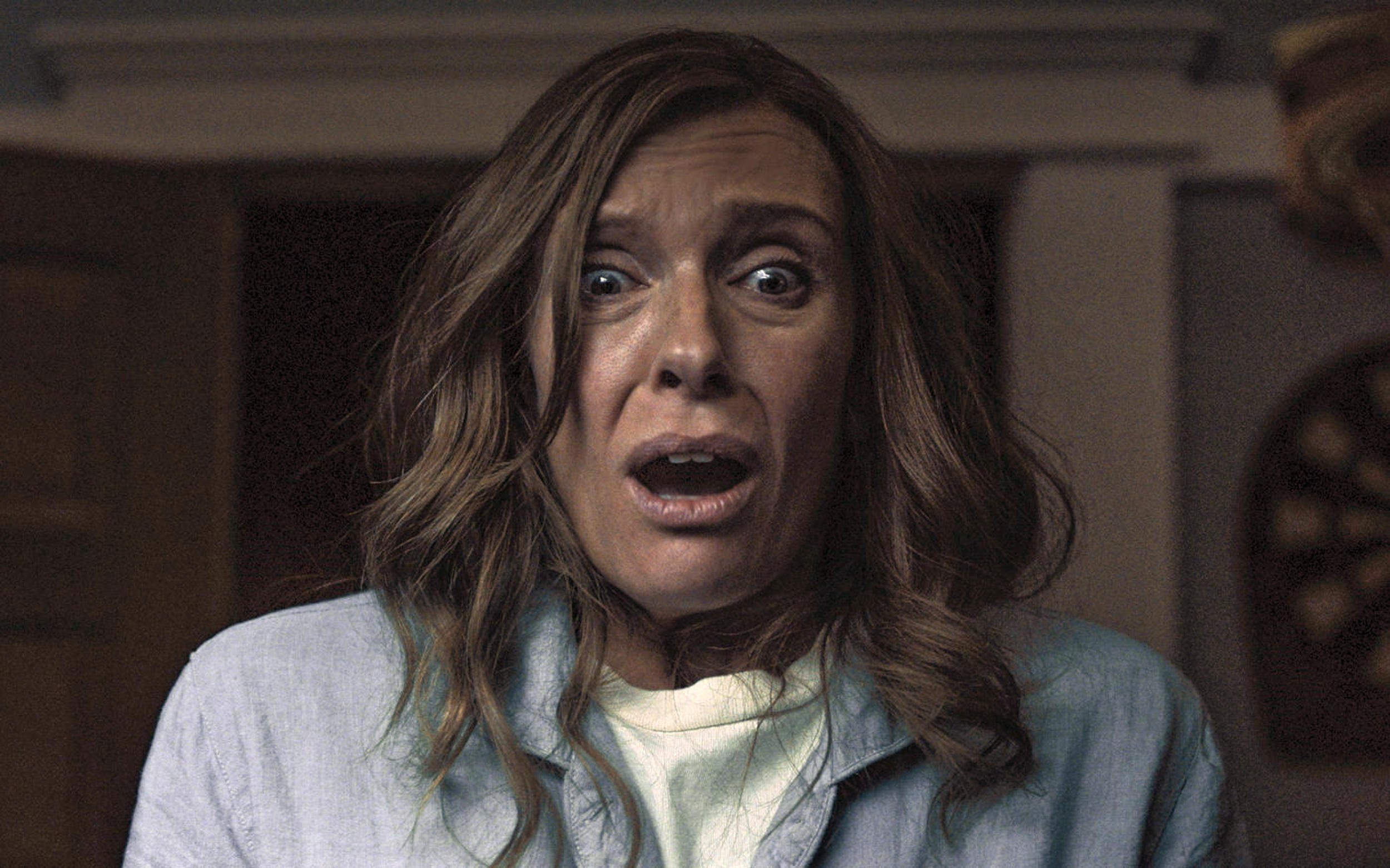
“Losing your head” (as in the horrific beheadings in Ari Aster’s troubling masterpiece, Hereditary) is what can happen under the severe distress and hell of unimaginable trauma. You can’t think about it. That’s why you dissociate. But when one trauma after another hits you hard, dissociation doesn’t work so well. Your old traumas come flooding back, and your terror drives you right out of your mind. You “lose your head.” It’s not a cult or demon that possesses you (at least not in the trauma world). It’s that your mind feels like it’s breaking under the weight of too many feelings, too much tragedy and grief. You’ll try anything to stop thinking about it. That’s what happens to Annie, Charlie, and Peter when they find themselves in trauma hell. They have no power. Not even Steve, husband/father/psychiatrist, can help them...
Trauma Hell in Hereditary
Trauma is hell. Going through it in the first place and its lifelong aftereffects can make you feel there’s no escape. You might even feel that your trauma has control and you don’t. That’s what makes Paimon, in Hereditary’s cult, one of the 8 Kings of Hell. But who is King Paimon in the mind of a traumatized adult or child? He’s the one vying for power when you don’t know what to do, when you can’t think about it. So, let’s take a look at the film Hereditary as the story of the Graham family’s severe traumatic reactions and defenses against thinking, instead of demonic possession.
The Graham family endures too many forms of trauma. Ellen (Kathleen Chalfant), the mother/grandmother/matriarch/supposed cult leader, has DID, according to Annie. That only happens when trauma is severe and involves sexual abuse. Annie (Toni Collette) couldn’t escape her mother’s possessive and controlling clutches (nor her mother’s trauma), and she lives in terror of her mother while suffering from her own erratic moods, depression, insecurity, and distrust of love. Charlie (Milly Shapiro), taken over by her grandmother at birth, didn’t have a chance. Peter (Alex Wolff) is traumatized by Annie’s conflicts about being a mother, having had a scary one of her own, and by loss and guilt over what happened to Charlie on his watch. Steve (Gabriel Byrne), husband/dad/psychiatrist, is burned up by his helplessness to save any of them.
Steve’s not the only helpless one. But he suffers in his own way because he knows what’s going on and can’t reach his struggling loved ones. This leaves him on the outside and traumatized, too, watching the aftereffects of trauma in each one of them: Helplessness. Fear. Immobilization. Anger. Disconnection. Dissociation from overwhelming feelings. Even “losing your head” because you can’t think about it, or make sense of anything. Mixing your loved ones up with people in your past. Feelings of rejection. Not trusting love. Not letting people who love you get close (like Annie with Steve). You’re confused about people. Mostly, about yourself.
That’s the hell in Hereditary. It all started with Annie’s traumatized mom with DID. A controlling mom, likely very angry (as Annie is with Peter). A mom who had to have her way. If they argued, Ellen would not admit she was wrong, or if she did, Annie paid for it. Ellen made Annie feel unloved. And so terrified (and guilty), she had to give baby Charlie over to Ellen, to cater to her demands. To have the slightest chance at being loved. To escape her mother’s rage.
How Trauma Is “Inherited”
Annie’s troubles didn’t come out of nowhere. That becomes very clear when her mother dies. And she reveals the trauma she experienced growing up at a grief group she tries to attend for her complicated, confusing grief. “My mother and I were estranged. But I loved her. My mother was old. And not altogether there in the end. She lived with us…” But her death “really wasn’t a huge blow.” She says all this in a staccato, hardened, angry way, shut down to any real feeling.
Yes, Annie is shut down, much like her own daughter, Charlie. Numb. That’s part of dissociation. And her mother, Ellen, was clearly dissociated, too. As Annie says, she had DID. And, if Ellen had DID, she was severely and sexually traumatized as a child. Traumatized mother. Traumatized daughter. When you grow up with someone living with the severe effects of unresolved trauma, it seeps into your pores. You’re little. You’re vulnerable. You’re alone. You have no one else.
And that’s just the tip of the iceberg. Annie’s father died when she was a baby. From starvation. Self-imposed, because of psychotic depression. Two very troubled parents. You don’t escape trauma in that environment. Nor did her older brother. When he was 16, he hanged himself in their mother’s bedroom, leaving a suicide note accusing her of putting people inside him…
“Putting people inside him” sounds like demonic possession. But growing up with traumatized parents infects you. We see it in Annie, Peter, and Charlie. We see the effects of inherited trauma in Hereditary. Secrets. Strange behavior. Erratic parents.
A parent’s unresolved trauma traumatizes a child. It does get inside you. But it doesn’t lead to actual demonic possession, although in the confusion of it all, it might seem that way. It leads to dissociation. To split off parts of you. To shut down feelings too unbearable to know.
The Necessity of Dissociation
Dissociation is a trauma defense you use to “kill” the pain. The fear. The torment. It’s a way of “not knowing” what is too hard to know. Or think about - things like how your mom treated you or how you actually feel. Dissociation is the state Annie’s in when she sleepwalks: “I woke up next to Peter’s bed when [he and Charlie] shared a bedroom, and they were both completely covered in paint thinner and so was I… I was standing there with a box of matches and an empty can of paint thinner. I woke myself up by striking a match, which woke Peter up. And he started to scream. And I immediately put the match out, I mean immediately, I was just as shocked as he was. And it wasn’t possible to convince them that it was just sleepwalking, but of course it was.”
Yet, of course, it wasn’t. Her numb feelings are still there. Just not known. Feelings and impulses like rage, despair, criticalness, rejecting feelings, and fear. Later, Annie says to Peter: “I never wanted to be your mother.” Is this her unconscious way of trying to end the cycle of trauma? Not wanting to be like her mother. Not wanting to pass it on. “Why?” Peter asks. He feels unloved. Unwanted. As Annie’s mother made her feel. This is Hereditary. Transmitting the trauma. “And there was nothing I could say, and nothing I could do because it happened… While I was asleep.”
Annie’s been sleepwalking for a long time. She dissociated early. Away from an unpredictable mother who scared her to the core. Away from all of her feelings. Of terror. Rage. Helplessness. Loneliness. Hunger for love. Dissociating is like being asleep. Like being somewhere else. Not present. Like what’s happening “isn’t really happening.” You disconnect. Go into a trance. Don’t think about it, like Annie, Charlie, and Peter. You don’t remember the horrors, like losing Charlie.
Yet, deep inside, you don’t forget. Annie is haunted by the bugs crawling all over Charlie’s head. By all the things she can’t get out of her mind. “Satony” is written on the wall behind her. No! Keep your feelings dead. None are safe. Keep them dead.
Remembering is intolerable.
Like finding Charlie’s decapitated head with bugs crawling all over it, and screaming: “Oh my God, Oh, my God, Oh, my God,” sobbing, writhing on the floor. Steve couldn’t comfort her. Nothing helped. “No, No, No, No! I can’t stand it. I just want to die. Oh God, it hurts too much. I just need to die…Charlie! Oh God, oh God.” Annie couldn’t stop screaming and wailing. When something is absolutely unthinkable and unbearable, that’s when dissociation has to take over.
The tongue-clicking in Hereditary alerts us to a traumatic memory coming back, like realizing Charlie’s dead. Decapitated. Gone. “Oh my God, no.” You can’t think about it.
“Losing Your Head” To Trauma
The loss of Charlie is unbearable. Anything to bring her back. Even going out of reality. Annie must “know” Charlie isn’t completely gone. To assuage her guilt. To undo what’s been done. This is how Joan gets to her. Draws her in. Seduces her into believing that a séance will do it. Will put her in touch with Charlie. Annie has doubts about Joan. Joan makes her wary and very suspicious. But her magical wishes take over. Anything. To stop thinking. Stop reality. She must reach Charlie.
But magical thinking doesn’t make what happened “not real” any more than dissociation does. And Annie’s grief and confusion send her over the edge. She’s possessed by her wish to be with Charlie again. To see signs of her “existence.” Yes, her little girl is lost to her. But Annie also has a lost little girl inside her. Abandoned. Hurt. Scared. By her own mother. A little girl self, buried inside her. Split off from awareness. Longing for a mom she didn’t have. Annie pushes Peter and Steve into a séance. Strange and terrifying things happen. Things move at command. Something bursts aflame. Annie starts growling, and a young girl’s voice comes out of her mouth: “Mom?”
This looks like demonic possession. Like Charlie’s voice is coming out of her. But in the mental health world, it’s severe splitting. A little girl exists inside Annie. And it’s that lost little girl, consumed with terror and unmet longing for a mother’s help and safety, who speaks: “Mom?!”
“Pandemonium” is unleashed inside them. Much like John Milton’s poem Paradise Lost, and falling into “the capital of hell, a place for the demons to gather.” We’ve already seen this hell in the horrific deterioration of the Graham family as the demons of their trauma take them over. In fights at the table. Cruel accusations. Blaming. Hurtful words. Rejections. Fights between Annie and Steve. Steve, calling Annie “sick.” Threatening the police. Love blocked. Love ruined. Distrust.
And now, we see absolute terror in Peter, also missing his mom’s love. “What’s happening?” “Mom?! What’s happening?” Peter screams: “Dad, make it stop. Dad, I don’t like this. Make it stop, make it stop, make it fucking stop!” Annie’s screaming, “Where’s Mom?” There is no mom there. Mom has lost her head to trauma. Annie’s mom did too. Mom is not reachable.
Peter is sobbing. Helpless. Later, he searches the house for his parents. He finds his dad’s charred body. And then his crazed mom is after him. He locks himself in the attic, crying: “Mommy, mommy, mommy, please, mommy stop, mommy stop! I just I gotta wake up, I gotta wake up, wake up, wake up.” Peter is slapping himself. But he can’t wake up. He can’t think. He can’t know what’s happening. There’s no Mommy to hear him. Or talk to him. Or make him safe ...
The tongue-clicking doesn’t stop. Where does Peter go from here? He needs power.
The “Cult of Power” Over Trauma
The ghosts of trauma threaten, awaken, and take you over when you don’t know what to do with your grief. Guilt. Loneliness. “Mom?! Dad?!” Is anyone there? Just terror.
It’s what happens when no one answers you. When no one hears your fears. When no one’s there. When no one talks about the trauma.
And, when no one talks to you, when you have no one to turn to, you put yourself to sleep. That’s Joan’s (Ann Dowd) job: to keep everyone asleep. The welcome mats, the same as Annie’s DID mother embroidered. Welcome to oblivion. That’s what dissociation tries to do. Wipe out what you know. Make the reality of trauma go away. That is the “cult of power” over trauma. Power no traumatized child, or later adult, has. So, the seductive voices inside your mind are alluring. Just like Joan stands outside Peter’s school. “Peter, Peter, Peter!... I expel you ...Peter! Get out!”
Yes, a voice inside you seduces you away from pain. A voice like Joan’s. A voice that calls you away. Tells you there doesn’t have to be loss. You’ll be just fine. Your loved one isn’t gone. You can call her or him back at will. That voice is always with you. It tells you that you have power over loss. Aloneness. Fear. Vulnerability. Helplessness. (But that voice is in your mind.) That voice overpowers thinking. Overpowers reality when reality is too hard to face. When you’re all alone.
When you’re scared and alone, that voice does its best to give you power over your trauma. That voice tells you that you are strong. Powerful. It says it will always protect you. Not unlike a cult. Its message is: “Don’t be weak. Don’t feel lonely. Don’t need anyone. Listen to me. You’re more powerful than that.”
Charlie ate chocolate bars to try to soothe and distract herself. She cut off the head of a dead bird, a foreboding of what happens when traumatic feelings are too much. She put the head into her sweatshirt pocket. A reminder. And, turning around, she saw a woman waiting for her, a woman, friendly, who waved at her. Joan. The one who beckons Peter. The one who welcomes deadness and sleep “as power.”
So, Peter is crowned King Paimon. As Paimon, he will have power over Hereditary’s hell, the terrible force of the Graham family’s inherited traumas. But. He loses himself. He loses his grip on reality. “His head.” And, Hereditary ends on a terribly tragic note.
That shouldn’t have to happen if you have someone to talk to ...