
BACKROOMS: Opening Doors or Keeping Them Shut? After Trauma...
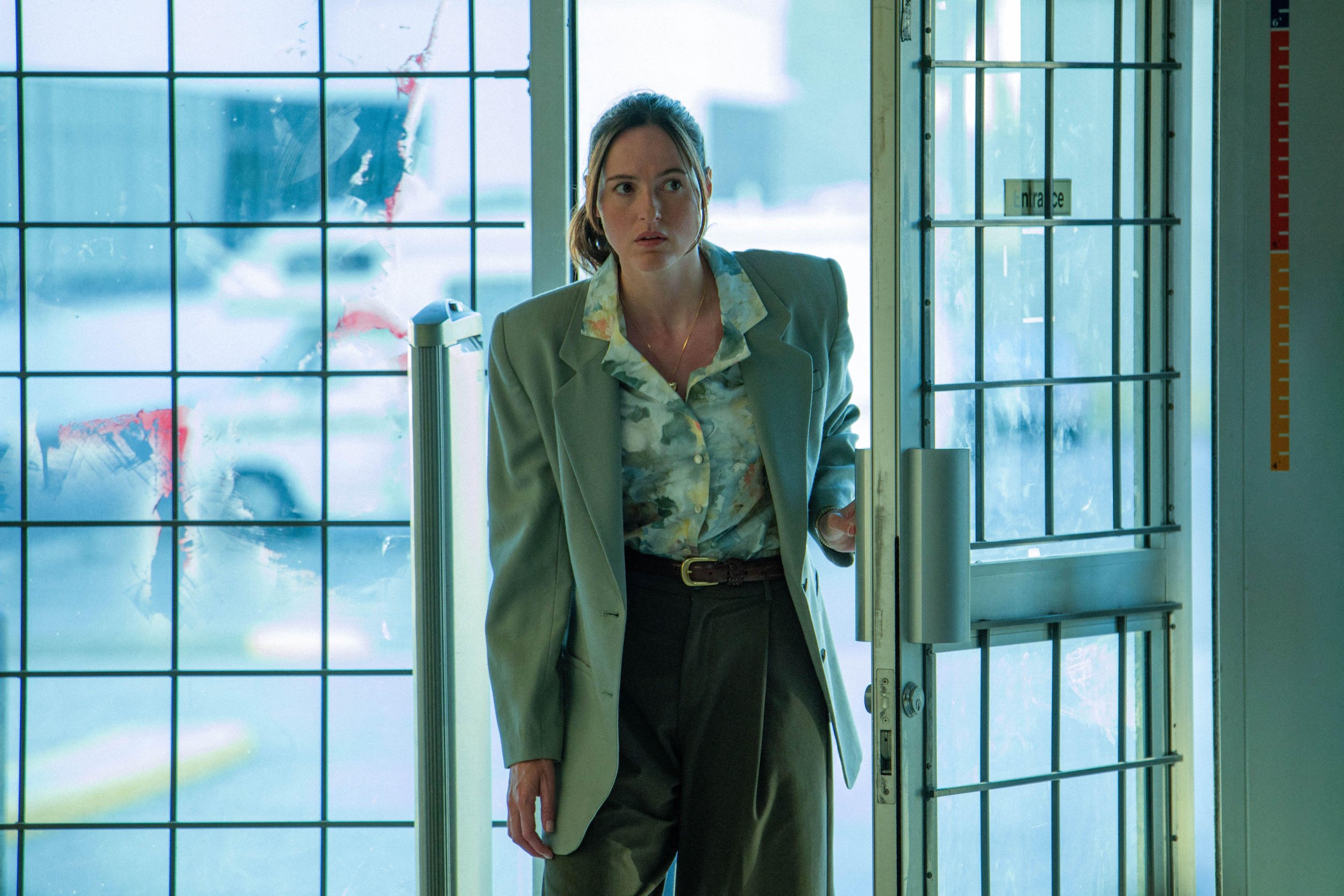
Empty rooms. No way out. Fear. Panic. No one to help. That’s the world of childhood trauma. And it gets recorded, in old, discarded memories that you push into the Backrooms of your mind. Frozen there, those leftover remnants of the childhood you’ve closed the doors on, as you try to soldier on, just like Dr. Mary Kline. Kane Parson’s Backrooms is the story of trauma. Of how Mary shut it off. And how, because of that, she can’t understand her patient Clark’s trauma, his anger, his rage, the trauma he’s been blocking in the Backrooms of his mind. Trauma too much like hers. Mother trauma. And all that neither of them can face or feel. Plus, what happens when you can’t …
Dead-But-Not Dead
Empty Rooms. Lonely Life. Hunger that can’t be filled. A mother you can’t reach. That’s Dr. Mary Kline as a little child. We see it in her flashbacks. We see it in Clark, Pirate Clark, too. To be sure, you try to make it go away. You “don’t think about it.” You do your best to move on. But. You can’t.
If you’ve been traumatized as a child, with no one there to help you, you’re forced to make your feelings go dead. But it couldn’t be more obvious in Mary Kline (Renate Reinsve) and Clark (Chiwetel Ejiofor) that childhood feelings and memories don’t go dead, even if you shut yourself down. They’re still living, walled off, in the Backrooms of your mind. They linger there. Dormant. Waiting. Until something sets them off. Something like being kicked out of your own house, unappreciated, used, misunderstood by your partner. Like Clark’s wife. And when your therapist doesn’t understand why you might be so angry, or the roots of it, that hurts you “really bad.”
And when she tells you that role-playing will work, instead of looking more deeply into your feelings or where they come from, because she’s walled off her own trauma too, you retreat. You don’t trust. And you go looking for your own answers because, once again, no one listens carefully to what you need.
So, the dead-but-not-dead seagull is the first clue to being awakened to what you’ve tried to make dead. Like Clark. But what Clark’s kept dead isn’t so clear. What is much clearer is Mary’s trauma. Her severe mother trauma is revealed as the film unfolds. Clark must have mother trauma too; he’s so angry at his wife (and now, likely, his therapist). Neither hears him. He’s left alone with it, locked away in the Backrooms of his mind. Dr. Mary Kline’s trauma is locked away, too. But being kicked out of his house, something little Mary also experiences, opens a door to Clark’s Backrooms. His trauma starts to wake up. He runs. Panicked. Because he’s all alone. There is no one there.
When the “Forgotten” Awakens
You “forget” because of trauma. Because of feelings that are too much for a child. Things you’ve been shamed for. Or that are much too scary to know. (Too scary all alone.) So, it all gets pushed into the Backrooms of your mind. That’s what happens. That’s what happened to Clark and Mary. Until you can’t keep it hidden anymore. Something – a fight with your wife, a patient with similar trauma - stirs up feelings. Flashbacks. Of memories you’ve tried to tell yourself aren’t real and don’t matter. Or, that they’re in the past; you’ve moved on. Maybe, to protect yourself, you’ve become somewhat of a robot. That’s Mary. Or an angry man. That’s Clark. And when those memories start to come back, and you have no one to help you, you freak out. You feel like you’re going crazy. You try to fight it. Or “fix it.”
So there Clark is, in Mary’s office. Trying to get help. But she doesn’t understand his feelings. She tries to shut down his anger. And that can be triggering if you’ve spent a lifetime being misunderstood. Alone. And hurt. So. Things keep happening. There’s a malfunction in Clark’s store (mind). Strange power outages. Lights that spark and die. Clark is terrified. Confused. And the Electrician is no more helpful than Dr. Mary Kline.
Falling Into the Backrooms
There’s a thin line between the (unconscious) Backrooms and your conscious mind, especially when something activates a memory. Or old feeling. Or something you’ve (unsuccessfully) tried to keep hidden. A strip of light shines through the crack in the wall. Clark has never noticed that crack before. But. Memories. Flashbacks. Old feelings are pushing through. Beckoning to him.
He feels afraid. And curious. Clark presses on the crack. And falls into the Backrooms of his mind. The ones you don’t know exist until something triggers a reaction you don’t understand. Piles of old discarded things; a dead (?) seagull, who can’t fly free of his trauma. Cords lead to a closed door. Does he open it? Can he enter and take a look around? There’s a tunnel. A packed bag. Another room with a floor that looks like sand. Buried sneakers and sandals. What’s been hidden from the past. Discarded-but-still-there. Waiting. It’s all waiting for Clark. And for Mary Kline, too.
In the Backrooms, memories of trauma exist. There’s a woman. Sitting with a little girl. Watching the demolition of a building. A place where they lived. A life is being destroyed. The woman’s face is hard. Ungiving. Unforgiving. Unloving. Unavailable to the child. Or her fears. The child is Mary.
What does a little girl do? She develops a theory.
“We all have our loops, habits, that have us walking in circles, looking for solutions, thinking they’ll take us somewhere new. You learn to push people away to stay safe. Then, as an adult, you’re still stuck exactly where you were. Alone.”
Mary’s a therapist now. Skeptically telling her clients, “It’s never too late to forge a new path.” The problem is, when you have a therapist who is shut down, still scared of people, and especially her own memories, when she’s trying to forget her own severe mother trauma, you can’t get the help you need.
Dead Mother. Dead Hunger
A lonely little girl. Psychiatric pill bottles that say “Nora Kline.” Mary’s very troubled, paranoid, psychotic mother. Windows that are papered up with newspaper. A window that Mary tries to open. “Mary! What were you thinking? I never said you could go outside. They are all over the place.”
Stay inside. That’s Mary’s mother. A mother who doesn’t see her needs. Who can’t offer her safety. A dead, depressed mother. A withdrawn mother. A mother who lashes out.
A mother who’s not there.
So, open windows? Open doors? Maybe not. Because when you do, you open the door to hunger. Hunger you’ve kept dead. Because there was no mother, there was no one there to feed you with love, understanding, and knowing how you feel.
And when that hunger wakes up. You’re ravenous.
We see Clark trying to feed on the dead robotic doubles of people in his life who failed him. Who didn’t and couldn’t give him the emotional food he needed. His wife (Kelly Craig) (likely no different than his mother), the Electrician (Philip Granger), who had no clue what was misfiring, and Kat (Lukita Maxwell), who failed to help him figure out what Backrooms are all about. Like Dr. Mary Kline.
A Therapist Who Doesn’t Help
You need that help. Or the things that start to emerge from the Backrooms of your mind, scary, confusing things, can make you think you’re crazy. Clark does. He tries to explain. But Mary is blank. Cool. He desperately tells her about the wall. The one that’s crumbling. The one he tried to keep intact, but can’t. Mary doesn’t understand. She has her own walls. Of course, he’s frustrated. He needs something he isn’t getting. That’s a familiar story. Too familiar. He’s angry: “I’m going to come back here with proof, and you’re going to give me a serious fucking apology.”
When you’re not believed or heard, there’s nowhere to go with it. You’re all alone. And you’re being flooded with what you tried to keep separate; what you tried not to know. But what’s coming back are impressions. Feelings. Piles of laundry left unattended.
A sign: Apartheid.
It’s what you had to keep apart. The hated, scary things; now emerging from that other area of your mind. But if you can’t keep it separate or make sense of it, and if help fails you (again), you start descending into a very confused state of mind. Those memories that can feel like madness. A lonely childhood. A child’s rocking chair. A fake Christmas tree. A tinny rendition of “Felice Navidad.” All that is unhappy. You tried not to think about it; the hunger for what you didn’t have.
And if there’s no help when you need it, your wires short-circuit.
Your rage can get out of control.
Pirate Clark & Trauma’s Rage
Clark has a lot of anger. He admits that to Dr. Mary Kline. “I hurt people. That’s just the way I’m wired.” Is it that simple? Is it an immovable fact? Is it really hopeless? Clark feels that way. Because his therapist doesn’t understand that it’s not his anger that’s the real issue. Hurt people hurt other people. Being left hungry for help (and love) hurts you. And that hurt can often turn to rage.
Pirate Clark (Robert Bobroczkyi) is the way Clark’s rage freezes and unfreezes. The way that it opens up; that it can get out of control. Because no one has ever made the connection to the way he’s been hurt. That’s what happens in trauma. Things get disconnected. The hurts. The memories. The real feelings get sent into the Backrooms of your mind. Lingering and frozen there. Creating symptoms. Like fears of love. Like mixing people up with your mother. Like a lot of anxiety about opening up and feeling something again. Something confusing. Something you can’t bear.
That’s why you need a therapist. To make connections to what happened to you. Not to accuse you. But to help you get free. And, when a therapist like Mary doesn’t, that’s more trauma. We hear Clark’s voice on Mary’s answering machine: “I opened a window. I won’t be coming back.” When you open windows into the past, you need someone safe to go with you. But. Mary isn’t safe.
Frantically, she drives to Clark’s Ottoman Empire and finds the wall. The one she didn’t believe. And when her hand pushes through the crack, she’s terrified. Mary doesn’t understand that the Backrooms (the unconscious mind) is a place that has answers if you have a therapist who knows how to listen. Looking for Clark, Mary falls into the Backrooms herself. “Where are we?” she asks.
“It’s everywhere that ever was.” Yes, it’s the memories, feelings, experiences, you’ve tried to forget. Layers upon layers of trauma. Levels that go down, down, down, endlessly, it seems. It’s what’s pushed down farthest. The hardest to face. The most painful. The most difficult to know.
Losing Your Sense of Reality
As Mary frantically tries to find Clark, where he’s hiding, she runs into his drawings depicting the "Captain Clark" Still Life surrounded by eerie scripts reading things like: "Why think in terms of magic?? Be realistic!!!” He can’t. Years of feelings and memories are stored in the Backrooms of your mind. When you don’t get help, you might withdraw from life and lose your sense of reality.
Clark has done just that. Mary says, “You know me.” He doesn’t. He’s mixed her up with everyone who has hurt him. She has, too. He starts to choke her, and a memory is triggered for Mary: She’s a little girl. The apartment she’s been living in with her mom has been evacuated for demolition. They can’t live there anymore, but her mom refuses to leave. Little Mary helplessly watches as her psychotic mom is wheeled away in a wheelchair. She sits alone in the house, with piles of stuff. Layers of her repressed traumatic past. Floors of it. Going down. Down. Down. The most intense terror and pain. “As a child, I learned to push people away. Now I’m still stuck.”
Yes, when you get no help, you lose your sense of reality. You “misremember,” as Clark says. Or you forget completely until something triggers the memory. Like Mary’s. “Who are these people?” People you want to feel nothing for. Just as Clarks tells her, “For starters, they can’t feel anything. No thoughts. No pain. No fear. They simply exist. Like the furniture. Best part: you can eat them.”
The thing is: you already did. You took them inside (“you ate them”) as a child. You shut down your feelings. Thoughts. Pain. You “forgot.” But you didn’t forget. Memories and feelings get stored in the Backrooms of your mind. Other people get confused with them. His wife is his mother. Mary is his wife. “I’m sorry I broke the glass and woke you.” But. The truth is: Clark’s trauma is not his fault.
When what exists in the Backrooms is too overwhelming, you hide somewhere inside and don’t want to leave or change. Sadly, you might even retreat from anyone’s help. You’re too scared of being hurt again. You can’t help but believe, “I don’t have to change. This is just how I’m wired.” Mary, in the Backrooms, faces her frozen feelings.
Rage. Fear. And. Her terrible, terrible pain.
Opening Doors or Keeping Them Shut?
“We all want to find out a little more. Doors open everywhere. But we don’t know how to connect them or stop them.” That’s what the “researcher,” Phil (Mark Duplass), in a Hazmat suit, says. But the only reason opening doors seems dangerous, and you have to keep them closed, is when opening them is “too much” and feels toxic. Too Risky. “Don’t go near anything in the Backrooms. Don’t remember. Don’t feel anything.” That’s why Clark hides and says he doesn’t want to change.
It is too much to open the doors to childhood trauma, to all you’ve had to push into the Backrooms, if you’re alone with it. To open those doors, you need a good therapist, a safe guide. Because when the doors open suddenly, in times that you’re triggered, what comes at you is scary. It’s confusing. And you want to put it back in its hidden place, far away. But sometimes you can’t.
Yet if you have a therapist (not one like Mary who is frozen in place because she hasn’t worked out her own trauma), then you can be understood, understand yourself, and make important connections. And you can grow. And change. And then you can become the person that you are meant to be.