
DIE MY LOVE: A Voice Warns: Don’t Love. Don’t Get Attached.
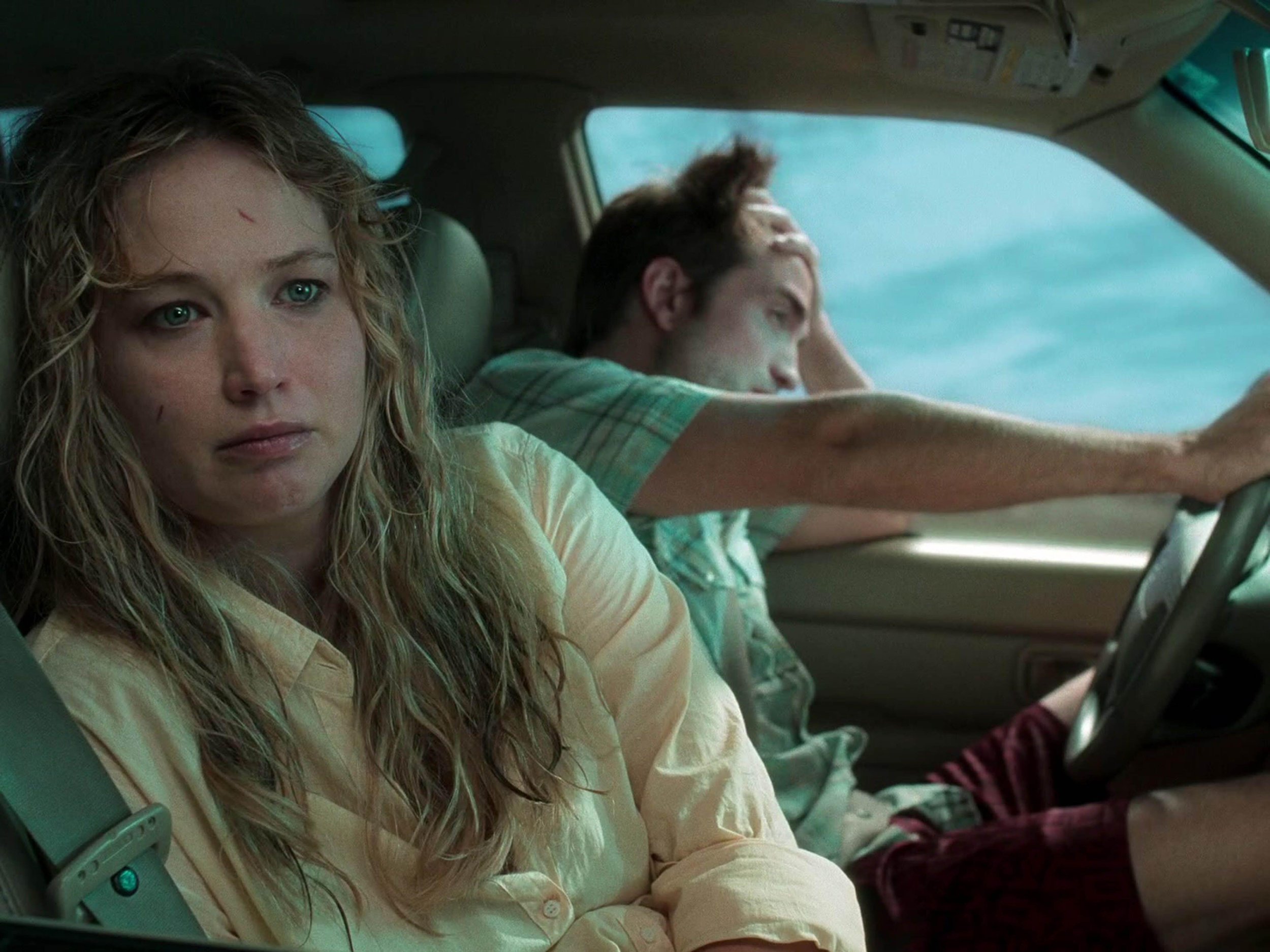
Childhood trauma has many triggers. And, having a baby can stir your earliest anxieties. So, Grace suffers terribly in Lynne Ramsey’s Die My Love. She doesn’t know why. No one does. Not until later. But letting herself love Jackson, moving to an isolated Montana, living in a house where someone died, and being an outsider in a loving family she never had - these feed Grace’s descent into madness. And then there’s the baby. A baby with no name. Her baby. But also, herself. Who is Grace? She has no idea. And, it grows clearer and clearer that Grace is terrified of love. Of any attachment. A voice inside her warns: “Don’t love. Don’t get attached. You know how that goes.”
So, moving with Jackson, starting a family, having a baby (yes, giving birth), that all demands love and attachment, right? And that sparks a bigger fight inside Grace, one that ultimately drives her crazy.
Giving Birth: A Trauma Trigger
Something happened in Grace’s early childhood. No sweet contact (like the ice pop). Something that made her feel terribly unwanted. This is reflected in her detachment from her own baby, the baby with no name. There’s no engagement. No happy connection. No joy in his existence. This must’ve happened to her. And it did. Her childhood trauma is only uncovered after her life unravels to the point of no return. This shouldn’t have happened. Not if Grace had proper help before it was too late. After she lost her parents at age 10. Long before her childhood trauma sank so deeply into her bones that it’s stuck there and she’s too terrified to let anyone in. To allow anyone to help. Yet, they look happy enough at first, Grace (Jennifer Lawrence) and Jackson (Robert Pattinson). But we have to wonder: was it Grace’s choice to move to rural, isolated Montana? To a rundown house in Jackson’s old hometown. Or was Grace so robbed of a real voice long ago that she developed a fake identity, a kind of forced happiness, a going-along?
When childhood trauma happens to you as a small child, you have no say. So, you go along, especially if you think someone wants you. “Going along” is common after childhood trauma. Anything for love. Love you don’t trust. And, there’s something else that’s more common than most people know. Having a baby triggers your childhood problems. That baby becomes you, even though you can’t see it. For a bit, Grace feels wanted. But any sign she isn’t? That spells trouble. And, Grace keeps seeing the “signs.” Jackson’s gone more and more. They aren’t having sex (she finds condoms in the glove box), and sex is a way that Grace proves that she is wanted.
Caring for a new baby, even one she loves, challenges Grace when there’s no one to care for her. There never was. Grace, we find out, has been alone since her parents died in a plane crash. And we don’t know where she went after. Plus, it seems, things weren’t so good before they died.
So, Grace has been alone all her life. Managing by telling herself she needs no one. It isn’t true, but she pushes everyone away. Is in a rage at Jackson. Fights him. Hates him. Wants to have sex with him. Feels rejected. Masturbates instead. Trying not to feel what she feels. She splatters blots of ink on paper and squeezes her breast milk on top of it. Mother hunger for what she’s never had mixed with the fear of needing anyone: a Rorschach of Grace’s increasing disturbance.
The Big Fight: “Die, My Love”
Feelings of love can “die” (or go dead) because of trauma. It’s like a voice inside says: “Die, my (feelings of) love.” Don’t let love in. Don’t get attached. It won’t go well. Remember that.” And, you do. You think it’s safer that way. Somewhere deep inside you believe that, like Grace does.
But. You do have longings. And here Grace is, with Jackson. She went and fell in love. She even got herself pregnant. That’s going against the voice. That wasn’t its “plan.” Now there’s a big, big fight going on inside of Grace. She’s lost herself. Or the “no need self” the voice created. She’s confused and torn apart. That voice took hold of Grace after the trauma. It forged her survival strategy. When trauma happens, you have to survive. And that survival didn’t include a baby and a man.
And now she has a baby who needs her. How can she be a mom when she didn’t have one? “The baby,” he’s called. Grace carries him everywhere. But she doesn’t engage. Doesn’t play. He’s trying to. She sticks her tongue out. He touches it. But she doesn’t look at him. He’s more of an appendage. Not a person. The store-bought cake is “too sweet,” not what a real mom would’ve baked. Sweetness isn’t what Grace can accept. Jackson offers her a look through his telescope. Grace shakes her head. He asks why she doesn’t like stars. She says, "The stars make me feel like nothing.” Invisible. Not wanted. Overlooked. That’s what she’s trying to run from. That’s why she knows Harry (Nick Nolte). Knows what he feels, locked into himself. She’s locked into herself, too.
Die, My Love. Grace is terrified. She didn’t listen to the voice: “Don’t let love in.”
The Voice: “Don’t Let Love In”
It’s hard enough to let love in when you’ve been traumatized by difficulties with love early on, when you don’t like your parents, when you wish they weren’t yours. But when those wishes come true, when they die, that’s when you put up your guards, those defenses that are meant to protect you. Like the voice telling you, “Don’t let love in.” You wished for something sweeter than your parents. But now, because they died, you feel too scared and guilty to let that happen. And, when it does, like with Jackson, well, it’s not perfect. What do you do with that? Jackson’s sweet, but he has his problems. He’s not always there. He’s scared of change, too. And he doesn’t always get Grace’s clues about how to make her feel wanted. Jackson makes his mistakes. But for someone as traumatized as Grace, his mistakes are misunderstood and misinterpreted. They become personal affronts. Serious neglect. Reminders of past trauma. They are trauma triggers.
No, Jackson isn’t very sensitive. He doesn’t see Grace, doesn’t understand her struggles. Sometimes thinks of only himself. “Look what I got.” “You got a dog?” That’s too much. More work. He’s gone all the time and not very connected to what she needs. And, since Grace’s needs are sexualized so that she’s not even in touch with what they are, she can’t begin to tell him. Plus, he’s more attentive to the dog. She tries to take care of the baby. And the dog drives her crazier.
The dog is needy. In pain. Like Grace. And she can’t stand knowing it, in Die My Love.
So, Grace compulsively masturbates. That’s one way not to be needy, or let love get too close. She tries to get Jackson to “fuck” her. Angry (really, feeling unwanted) when he won’t. But “fucking” and masturbation are different than letting love in. Grace uses them to run from the too much-ness of scary, lonely, needy feelings. To make the real unreal. To pretend that her feelings don’t exist.
Grace is scared. Maybe it doesn’t look like it, but she is. That’s why she isn’t in her right mind. Why, if anyone says anything remotely approaching the reality of her needs, she pushes them away; she’s on the attack. No. Don’t open up. Don’t get attached.
The Voice: “Don’t Get Attached”
Attachments are about needs. When you didn’t get what you needed as a child, that brings all kinds of attachment problems – anxious, avoidant, disorganized – as we see in Grace. And a voice takes shape inside you, warning you, trying to protect you from hurt, “Don’t get attached.”
That might seem safer. But it creates all kinds of problems. Because, really, you have needs. Just like Grace does. Certain life events, like having a baby, moving, or being isolated, bring up those needs. Needs that you want to fight. Needs you don’t want to have. And. Grace fights them hard.
Then, there’s Pam (Sissy Spacek). Jackson’s mom. Sweet, well-meaning, understanding Pam. Grace always needed a mom. But she fights that too. Can Grace let Pam in? Not really. But she relates in Die, My Love. To Pam’s loss of Harry. Sleepwalking. To Pam’s disorientation. To the gun. The gun protects you. Keeps dangerous people away. Warns them off. And can kill a dog in pain...
Pam tries to reassure her: “You know, Grace, everybody goes a little loopy the first year.” Grace says, “Well, you and Harry knew each other your whole lives. Of course, you’re going to go a little loopy.” Pam laughs. “No, I mean you ...” Grace looks at Pam with no affect. Stares at her, as if to warn her away. Pam offers help, “If you’re having a hard time…” But. No. Help is dangerous. Grace stands up abruptly. Dismisses Pam. “I feel fine. We’ll come again soon. Thanks for the tea.”
It's the need that Grace can’t stand. Sex? Masturbation? Those methods don’t work. People? Help? Those aren’t safe. People can betray you. Leave you alone. Hurt you. “Don’t get attached. Get rid of your pain at all costs.” The pain of wanting love but not letting it in. The pain of love that hurts. The pain of being alone. That can drive you crazy-confused. Grace shoots the dog.
If she shoots the dog, Grace is the one who controls the loss. No sadness there. But. She watches Jackson bury the dog. His face is a picture of pain. She holds the baby, looking strangely serene, puts him in a highchair, and suddenly, forcefully, catapults herself through the closed glass door.
At the hospital with Grace, Jackson says, “I’m sorry.” She responds, “You looked so sad.” Sad. That’s what Grace cannot feel. That’s why she stays locked inside herself.
Locked in. Tight. In Die My Love.
Alone. Alone. Always. All Alone
Locked in. That’s what Grace is. Locked so far into herself that she can’t come out. She can’t. Because. She could be hurt. Alone is safe. Alone means not letting anyone in.
In Die My Love.
People try to help. They do. But Grace doesn’t trust them. Help can humiliate you. Turn on you. Make you feel something is wrong with you when you’re trying to be ok. Take the woman at the party. She’s friendly enough to Grace. Grace, detached, not present, dissociated, can’t make eye contact. She’s distracted. The woman sees that she is having problems and tries to relate. Reassure. Says that she nearly lost her mind in the first six months. Grace quips (rudely), “When do you think you’ll get it back?” The woman laughs and says, “You know, people won’t talk about it enough, but postnatal depression is more common than we think.” Grace gives her a disdainful look, turns away, takes off her dress, and escapes into the pool with the kids. In her underwear.
When she gets out, Jackson’s so distressed, he’s having a panic attack. He thinks it is his heart (it is, he’s so sad). Grace pulls it together, acts normally, helps him breathe, and lets him know that he’ll be OK. On the way home, he says, “Let’s take this as a wake-up call. We need to look out for each other, Grace.” All Grace thinks will help is sex. She has to be sure Jackson wants her. Wants her. She tries not to care. With that haughty, self-satisfied, scornful, cocky, sneering look on her face.
But. Maybe. Being married? Yet. (Uh, oh). That means love and attachment? “Do you want to get married, Grace?” “Fuck, yeah!” But. At the wedding, she gets very drunk, more and more sexual (it’s her safety zone), and out of control.” Kiss me, kiss me, kiss me.” Being married doesn’t make her feel wanted, like she thought it might. It feels like a trap. She’s crawling on the floor, as she did in the grass. Jackson watches, upset. The happy time? Short-lived. The voices take over. “Don’t let love in. Don’t get attached.”
That’s too scary for a traumatized soul. Grace must run.
It Doesn’t Have to End Like This
Grace leaves the wedding party. Drunkenly takes the baby in the stroller. Walks fast down a long, long country road, in the dark, not knowing or caring where she’s going. Daylight starts to rise. Jackson frantically finds her and the baby. He’s shaken and scared. Grace looks shocked at herself. Looks, actually, quite terrified and confused. She’s lost her smug, self-satisfied, “fuck you” look.
Jackson takes her to a hospital. She tells her story of trauma. Of wishing her parents weren’t her parents. And then they died. Does this trauma have to be the end of her story? No. It didn’t have to be. But it was.
Healing from severe trauma takes time. Follow-up therapy. Learning to trust. Having a place to feel safe. To know that love and attachment won’t kill you or someone else. It’s not just a doctor saying, “That must’ve been terribly difficult, perhaps you have some abandonment issues. This makes it hard to safely attach to people. To your husband. To your son.” Grace gets angry: “I don’t have a problem attaching to my son. He’s perfect. It’s everything else that’s fucked.”
She’s dazed. Dissociated. Distrusting. Doesn’t the doctor notice? It’s not easy to learn to trust. BUT. He doesn’t notice that he’s made Grace feel she’s done something “wrong.” That he’s put her on the defensive. That she’s now closed down.
The voice’s warnings about people and help get louder.
Grace didn’t get the help she needed. Her trauma wasn’t understood. She couldn’t be open enough. She didn’t have enough time. Jackson goes to pick her up. She runs to the baby, happy and smiling for the first time in Die, My Love: “Hi, baby, I missed you.”
There’s a welcome home party. Grace even bakes her own cake. “Mommy’s home.” The house is all fixed up now, but it has nothing to do with Grace. Jackson did it all without her. Another way he doesn’t see. He asks her, “Are you having a good time?” She says, “The best ... thank you for taking care of everything and painting the house, taking care of the baby, having me fucking committed. You’re just the best.” She raises her glass. “I shot a dog. We came to be, and we ran amok. May we live long and die out.” No. You can’t live if you’ve killed off your feelings and needs.
Tears fill Grace’s eyes. Sad is too much. She storms out. Jackson follows. In the car: “Where are you, Grace?” “I’m right here. You just can’t see me.” He says, “I love you.”
She says it back. John Prine plays:
She's my baby, I'm her honey
I'm never gonna let her go
He's my baby, and I'm his honey
I'm never gonna let him go
In spite of ourselves, we'll end up a-sittin' on a rainbow
Against all odds, honey, we're the big door prize
We're gonna spite our noses right off our faces
There won't be nothin' but big old hearts dancin' in our eyes
They look connected and happy. For a moment. But. Grace abruptly stops that feeling. "Enough.” Love is too much. She can’t let it in. She burns her journal. Takes off her clothes. Naked, she sets the trees aflame. And. Grace walks straight into that burning forest. Too terrified of abandonment. Of losing the only self that she’s ever constructed. A “self” that is locked inside her self-erected walls against attachment and love. A loner. Terrified of isolation. But having to choose it.
If Grace had the help she needed. If she could let it in. If someone made her feel safe, her feelings of love didn’t have to die. But. Sadly.
There’s no sitting on a rainbow for Grace in Die My Love.