
THE BEAST IN ME: When You Can’t Bear Emotional Pain ...
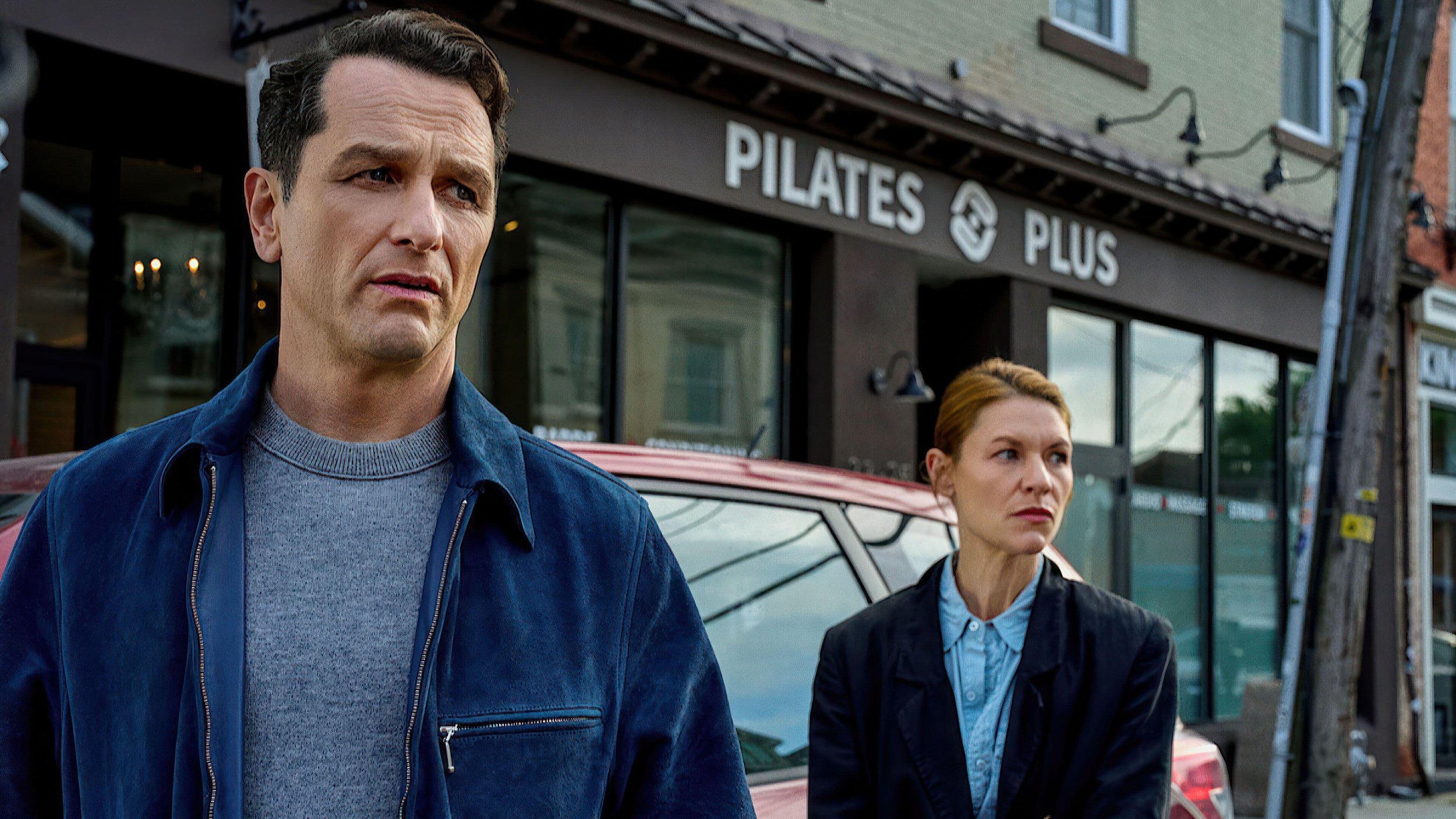
Aggie and Nile are mirror reflections of each other (sort of, but not all the way), in Gabe Rotter’s new mini-series, The Beast in Me. Not all the way, because Aggie isn’t a killer. Yet, what they have in common, what they live with inside themselves, draws them to each other. And that’s loss. Loss so deep and early it rips you apart. Loss that makes it impossible to bear emotional pain; hurt, feelings of betrayal, and later losses, all of which turn to fantasies of revenge. To rage. Blood lust, Nile calls it. As Aggie says at the end of her memoir: “I cradled vengeance like a second grief. A sacred companion. I told myself a story about right and wrong, about punishing the guilty.” The problem is, for both Aggie and Nile, projection of blame designs their “stories,” so they can weave a second, tougher skin around them. That way, they don’t feel pain and can deny their own guilt.
Loss That Rips You Apart
Devastating loss that rips you apart. That’s how Aggie (Clare Danes) and Nile (Matthew Rhys) started their lives. Nile’s devastation was more severe. And the ways that it added up and took form inside him are why he ended up a murderer. As they slowly confide in each other, rarely trusting or talking to anyone openly, we see that both are wounded by their fathers. Aggie’s father was a grifter and a drifter, unreliable, always on the run. Nile’s father, Martin Jarvis (Jonathan Banks), put himself first and foremost. This, to the point that he drove Nile’s mother to miscarriage after miscarriage because he had to have a biological son to carry on his name. He didn’t care about her. He doesn’t care about Nile. So, Nile’s mother died soon after Nile was born. He can’t bear his grief, blames his father, and takes it out on anyone and everyone who hurts him or whom he can’t control. Aggie’s mother? We hear nothing of her. She’s absent too. And, then, of course, Aggie lost Cooper. And, Shelley (Natalie Morales). Losses she can’t begin to wrap her mind around.
This is all one path to HATE. But the thing is, Aggie and Nile are also sensitive souls. That is, when their armors crack. Yes, even Nile. You might think that sociopaths and criminals have no feelings, but that isn’t true. They have deep and painful feelings they hide and bury so far down that it only appears they don’t have any. They must be untouchable. Because they are so easily bruised.
We see that in Nile. (Much milder in Aggie.) Quick to rage, if crossed or hurt. Because when you don’t have anyone to hear you. Or help you. Or care about your feelings, it can rip you apart so badly, you live divided. Split into two or more selves. Coexisting. But different. In The Beast in Me.
Living with Split Selves
Trauma is the place where a split self begins. Abuse. Misunderstanding. Neglect. Criticism. Humiliation. Receiving no empathy. These create an intolerance of emotional pain. A rejection of sadness and guilt. A hatred of vulnerability, so strong, because it seems like a terrible weakness.
Both Aggie and Nile refuse to be vulnerable. How can you be, if no one was there in a sensitive way? You toughen up. You have to. You reject your softness. Forge on. Determined to be “strong.” Refusing to be scared. Then. Rage wraps around you like a fortress. No one can get through. That’s Aggie and Niles. But it’s especially Niles, in The Beast in Me.
Nile makes others scared. Imperiled. To “save” himself. Especially if they’ve crossed him. Or threatened his tough defense. His power. And when they are vulnerable. When he gets them scared enough, he strikes. He kills. Yes, he kills them. Yet, through them, he kills his own vulnerability. Niles will get his way and feel nothing; however, he needs to. He’s smart. Oh, so smart. He reads people. And, he thinks he’s accurate every time. He needs no one. He lets no one close. It’s a massive self-protection. A dangerous. Frightening. Cruel. Murderous. Self-protection.
But lurking far below his grandiose demeaner is a scared and sad little boy. His face falls when he has no control, when he’s failed. (Is this how his dad takes him down?) We see it. After his father shames him, making him feel small and inconsequential. That’s when he viciously, and with the greatest of pleasure, beats Agent Brian Abbott (David Lyons) to a pulp. After all, he deserves to die, doesn’t he? For playing around with Maddie. His wife. And, she deserves to die, too...
We see fires of rage burn. In Nile’s devastating helplessness. “Fuck!!” But even though he doesn’t seem to need anything, as icy as his father, he does need someone to listen. So, he drops his guard with Aggie. Thinking she’s exactly like him, and will be on his side. That’s his first mistake.
Rage as a Second Skin
Rage forms a second skin, an armor around you, when you’re easily bruised.
Sure, Aggie has Nile fooled. He thinks they’re cut of the same cloth. Yes, she’s hard as nails. She can’t be bought. And, she’s angry as hell. (That’s her armored self-protection). She flies into a rage when he mentions the loss of her son. She gives in to tears, but her anger takes the tears away: “Don’t you mention my son and keep your dogs away from my fucking house. My answer is, “No!” No one says, “No” to Nile. No one has more power than he does. Now it’s a battle of wills.
Aggie’s anger towards Teddy Fenig (Bubba Weiler) is unrelenting. She sees him as a killer, the drunk driver responsible for her son, Cooper’s death. She makes his life miserable. Throws a stone through his workplace. To the point that he gets a restraining order. Aggie wants him to suffer.
She’s in a rage, and Teddy’s her target. Shelley, her ex-wife, says, “Sometimes bad things just happen,” and tries to convince Aggie she needs help. Yet, Aggie doesn’t want Teddy dead. Nile doesn’t get that. He says to her, “You have to see him all the time. It isn’t fair” ... (like he has to see his father all the time, knowing he’s responsible for his mother’s demise.)
We see feelings in Nile, quick to evaporate. And then, Shelley calls, Teddy has disappeared. Like Nile’s wife, Maddie (Leila George). Aggie begins to witness the beast in him, in The Beast in Me. She sees his cold, hard, cruel face in a photo with his father ... and it merges with hers.
Are they the same? Not quite. (Aggie redeems herself. She’s capable of self-reflection. Not Nile.)
Rage is “useful” as a self-protection. Rage takes away other, more vulnerable feelings. Like sadness and grief. But rage is dangerous if taken too far. And, some use projection of blame more than others. To obliterate any possible guilt. Aggie’s panicking: “What did you do?” Him. Or her?
Why Some Project More
Nile? He lives in terror of his father. Always has. Imagine what it was like for him as a small boy. Always feeling bad or wrong. Or being his father’s puppet. When you’re terrified, that’s when projection takes over. And, it can take over big time. It’s not you who is frozen in fear. No. You terrorize others. Make them feel what you absolutely cannot afford to feel. It just might kill you.
And, Aggie. She lives in terror, too. Of feeling her feelings of guilt. Also, her shame. She tried so hard to have a different life from her dad. Now this? Teddy’s been a convenient target. But was he to blame? Was he even drunk? Shelley doesn’t think so. But where does that leave Aggie?
Teddy’s bereaved mother (no different than Aggie) yells at her when she shows up: “This is what you wanted. She made him do it!” Aggie drives away in a panic. Nile is nonchalant. Icy. Without feeling. Yes, he’s a sociopath. A take it all for myself and who cares about anyone else kind of man: “Oh, the Fenig guy. I saw it on the news. How are you feeling about that?” Aggie says, “It’s complicated.” “Is it? At least you don’t have to worry about seeing him. Karma’s a mother-fucker.”
Nothing’s complicated for Nile. He’s the instrument of karma. He cares only about revenge. At least he won’t let himself care. He has to believe his victims deserve what they get. The death sentence at his hands. Because he lives in massive projection. All fault exists in them. Not him.
It’s not so simple for Aggie. What Shelley yelled at Aggie penetrated her soul: “If anyone killed Teddy, it’s you. You made sure he could never forgive himself. You’ll find anyone else to blame, so you don’t have to look in the fucking mirror. Now get out! We’re done.” Shaking Aggie to the core.
Nile can’t be shaken. His projection. His conviction. Is absolute. Aggie starts to look in the mirror.
Seeing Yourself – Or Not
“The truth is, we need our villains. Without them, we are left to face ourselves.”
Her flashbacks help Aggie to see. She can’t avoid them. They come of their own will. Unbidden. Unwelcome, even. It’s the trauma of loss in those flashbacks. An image of Cooper flashes into her mind. Before they drove to the doctor. She got angry. Now, she cries. Aggie hardly ever cries. It’s part of her self-protection. It’s what Teddy serves. Flashbacks break through her avoidance. Her numbness and “forgetting.” She was put together then. Not agitated. Unsure of herself. Wanting to run. And. Hide. If you remember, you can know. Grow. See yourself clearly. And, you can heal.
Aggie can. Nile can’t. Nile is bent on control. Projection/reversal. Courting danger all the way. Like he tells a terrified Aggie, on the roof of Jarvis Yard: “I always have the urge to jump. The French call it l’appel du vide (step into the void). My theory: we’d rather jump than fall or be pushed.”
Nile has voided his mind of all his troubles and of anything or anyone that might make him see. And, he’s gone too far ... what he’d have to face in himself is horrifying and unforgivable. So, he holds onto his arrogance, even in prison. “I’m reading a lot. It’s not so bad.”
But Aggie does face herself. She goes to Shelley. Cries. Begs forgiveness. Apologizes for her selfishness, anger, the way she thought only of herself: “I can do better, if you’ll just let me try.” They both cry. “I’m so lost, Shelley ... I don’t know who I am without you.” Shelley slams the door.
Aggie finds out who she is. The hard way. Nile frames her. Angry that she’s pieced together the truth about him, he waits for his chance. He leaves Teddy’s dead body in Cooper’s room. Still, the truth is: Dead feelings can be resurrected. Saved from their banishments. Wounds can heal.
Wounds that Never (?) Heal
Nile’s wounds can’t heal. He’s gone too far. Taking death into his own hands. Controlling it. To be sure that no one will be taken from him again. Like his mom. He’ll beat Death to the punch. He’ll decide. Sadly, that’s the end of Nile’s story. That is, until Uncle Rick (Tim Guinee) decides for him.
But Aggie. Terrified that she’s being accused of murder, and on the run (as she’s been on the run from her feelings), she finally faces her guilt in a flashback of the day Cooper died. She was distracted, on the phone, being interviewed for her book, as he was kicking the back of her seat. Maybe she knows it was an accident, not her fault, but she’s as culpable as Teddy Fenig. And, Teddy’s dead.
Healing means: seeing what you had to do to survive, and knowing it doesn’t keep you safe. That’s what Aggie tells Nina (Brittany Snow). It’s not blaming others, as Nile’s does, about his killing Teddy and Maddie: “I did what you wanted me to do.” He mocks Aggie and Nina when they say, “I didn’t want that.” Scoffing at them: “I’m not the only one with this inside me. I’m not.”
BUT. Hateful fantasies are not the same as murder. Nile acts out those fantasies because he can’t bear any kind of emotional pain. To heal, you must learn to feel it, as Aggie finally does:
“I told myself a story ... about punishing the guilty. Nile smelled my blood lust ... he soaked up my rage and ... made manifest a wish too horrible to name, leaving another mother to grieve her son, another rage to grow unchecked. Vengeance birthing vengeance. A wound that never heals.”
BUT. It doesn’t have to end that way. When this cycle is stopped, when your rage is understood and heard, your wound can be connected to an early loss, as Nile’s rage wasn’t. Then. You can see the beast of rage in you for what it is. And you can tame it. Like Aggie in The Beast in Me.