
NOW VOYAGER: Mother’s Cruel Voice & Settling for Crumbs
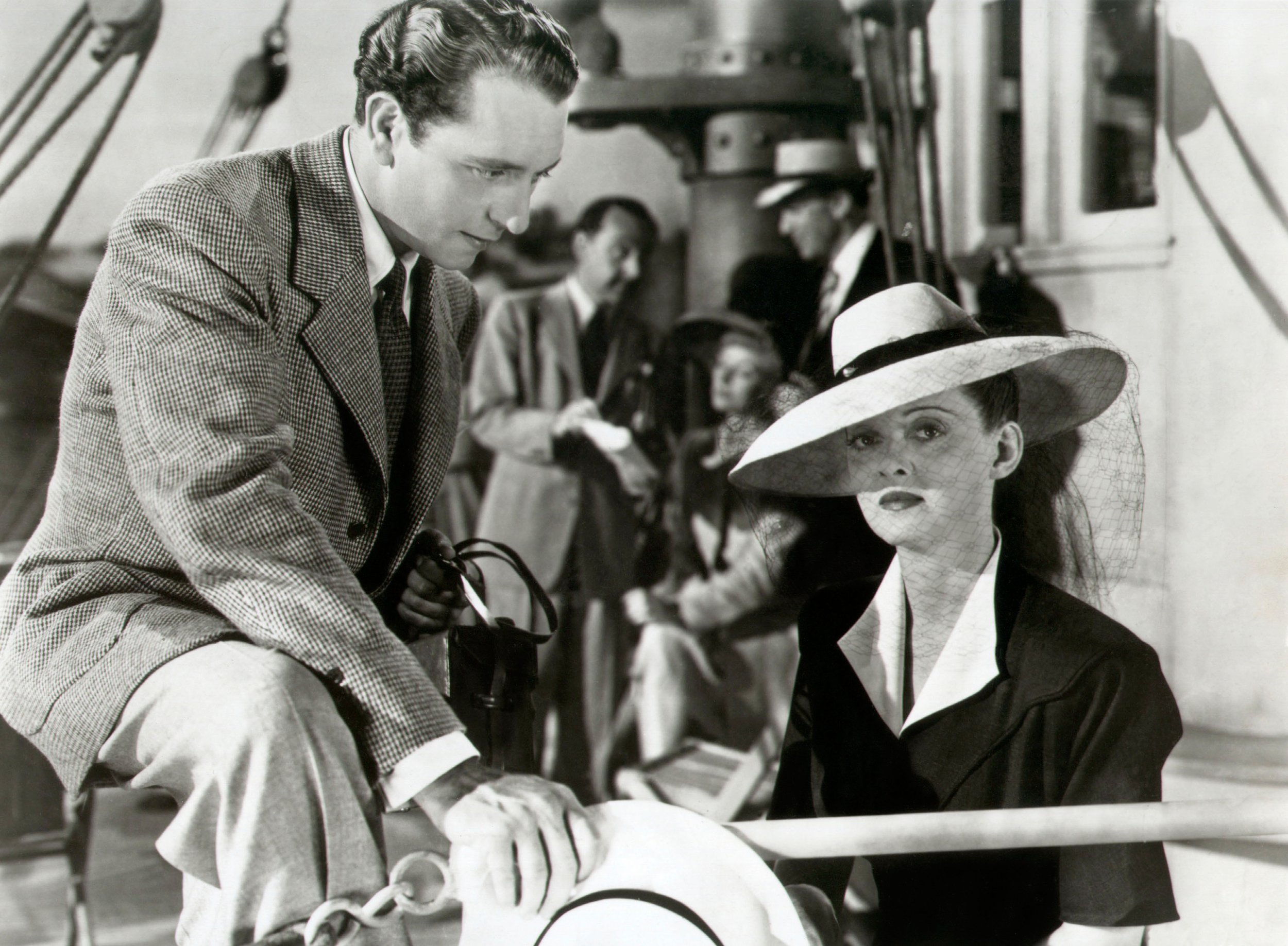
A mother’s cruelty is severe childhood trauma. It ruins your self-esteem. Creates a rage that turns into self-hate, seething inside until it drives you almost crazy. That’s Charlotte Vale in Irving Rapper’s 1942 Now, Voyager. Trapped. Lonely. Sad. Because she believes she is an “ugly duckling,” as her mother calls her. That’s a horrible feeling. You can’t trust love. You lose hope anyone will ever want you. You hide away - until someone sees your pain and reaches out to help you. But such cruelty can still have serious aftereffects, no matter how hard you fight against your guilt for trying to have your own life. That’s why Charlotte Vale ultimately settles for crumbs of a love she can’t fully have…
A Mother’s Cruelty
“My ugly duckling”
Charlotte Vale (Bette Davis) never had a chance. “Mother” (Gladys Cooper) has the kind of coldness Ingmar Bergman spoke of, in referring to his own childhood trauma: "I was quite sure I had been an unwanted child, growing out of a cold womb." This captures Charlotte to a “T.” Her mother is: Icy. Demeaning. Unreachable. Cruel. Domineering. Alwaysin control. Guilt-inducing.
There is no way Charlotte can feel good about herself. She’s infantilized. Humiliated. Treated as a child. (But even a child shouldn’t be treated like that.) In Mother’s words, “I’ve kept her close by me always. When she was young and foolish, I made decisions for her, always the right decisions.” She calls Charlotte’s problems “nonsense.” She denies anything is wrong with her “little girl.” Charlotte isn’t allowed a mind. A feeling of her own. Or a life. Charlotte reacts. Of course, she does. Rebels (a little). Smokes in her room. Hides the evidence. And hates herself.
Yes, Mother is dripping with venom towards her only daughter. “Some facts about my daughter? Charlotte was a late child. I was well into my 40s. There were three boys, and then along came this girl (Charlotte). Her father passed on soon after she was born. My ugly duckling. Of course, all late children are indeed marked.” Marked by what? Being unwanted? Resented? Punished for being born? “Chosen” to be Mother’s slave: “They told me before you were born that my recompense for having a late child was the comfort the child would be to me in my old age, especially if she is a girl.” Charlotte must make it up to her. To do so, she’s Mother’s prisoner.
Lisa (Ilka Chase), Charlotte’s kind sister-in-law, tries to intervene. She brings in a foremost psychiatrist to help Charlotte break free of Mother’s clutches. But Mother turns even more on Charlotte: “Lisa tells me of your latest peculiarities. That your fits of crying, your secretiveness indicate you are on the verge of a nervous breakdown. Is that what you’re trying to achieve?”
No. Mother is pushing her into it. Charlotte is not allowed a thought, a feeling, or a decision that Mother doesn’t like. She’s: Sad. Angry. Frustrated. Trapped by terrible guilt for the very normal thing of wanting her own life. Sadly, it’s this guilt that Charlotte never really breaks free of. (All thanks to Mother.)
Nervous Breakdown or Not?
“Stick to your guns but don’t fire...”
So, there couldn’t be a better time for Lisa to introduce her dear friend: “Mr. Jaquith. I ran into him on the street and brought him here.” But Charlotte, distrustful of everyone and humiliated at being seen, flies off the handle and runs upstairs to hide in the safety of her room. Lisa calls after her, “Charlotte, please believe me, I was only trying to help.” Mr. Jaquith, really Dr. Jaquith (Claude Rains), is a foremost Psychiatrist from New York to Boston, and he usually does not make house calls. She’s dropped the “Doctor” for “Mr.” because otherwise Charlotte will shut up like a clam. But Dr. Jaquith knows how to reach someone like Charlotte. And he’s not scared of “know-it-all” people like Mother. He stands up to her: “Often late children aren’t wanted, and that can mark them…You couldn’t have done a better job of destroying your daughter’s life.” “What? A mother has rights.” “No, a child has rights. A person has rights to discover their own way.”
So. Charlotte shows him her room. She points out that she got home late one night and, well, the creak in the stairs has never been fixed. She unlocks her door, saying, “She locks her door, doctor, make a note of it.” Testing him. “I’ve never said that a woman’s home is not her castle.” “My Castle, doctor.” Her only private space. Then he asks for a cigarette. “Do you think I hide cigarettes up here, doctor? My whole secret life? And you should read this, doctor; it’s a shame that you should come all the way up here and miss this, the intimate journal of Miss Charlotte Vale, Spinster.” “Won’t anything convince you that I don’t wish to pry?” “Oh, but you must pry; I insist that you do… (She needs someone to know her suffering.) The last trip abroad with my mother. I was 20, you didn’t know me then. I had an affair with an officer on the boat; his name was Leslie, he defied my mother and put me on a pedestal, and he wanted to marry me. But Mother refused. He wasn’t suitable for a Vale of Boston. And no one ever was. What man would ever want me, doctor? I’m fat. Mother doesn’t approve of dieting… Mother approves of sensible shoes, good solid books. Look at my library. I am my mother’s well-loved daughter. I am my mother’s companion. I am my mother’s servant.” “My mother, my mother, my mother, …”
Sobbing, she pleads, “Dr. Jaquith, can you help me?” “Come on downstairs.” He looks disapprovingly at Mother: “I suggest a few weeks at Cascade…” He helps Charlotte find her voice.
“Stick to your guns, but don’t fire,” he tells Charlotte, reaching her scared little self. He helps her not be blinded by Mother’s cruel voice. Then, he breaks her eyeglasses: “The oculist says that you don’t need them.” And he’s cooked up a plan with Lisa for Charlotte to live elsewhere and not go home to Mother. Saying goodbye, he gives Charlotte a piece of paper with his favorite Walt Whitman quote: “Untold want, by life and land ne’er granted. Now, voyager, sail forth to seek and find.” Mother deprived her of wants. Of love. Of a mother. Of a man. Now’s her time...
But will she find what she needs? Or will Charlotte Vale unconsciously repeat her past?
Jerry’s (Unavailable) Love
“Gratitudefor the crumbs offered...”
On a ship bound for Rio de Janeiro, the passengers wait for a woman to disembark, someone who is holding them up; they call her Miss Beauchamp. But it’s Charlotte Vale, who appears, looking transformed. Beautiful, sexy, and very classy, wearing a hat with a net over her eyes. And then there’s a man. But a married man, whose love is not fully attainable. His name is Jerry Durrance (Paul Henreid). And she’s asked to share a shore vehicle with him. She starts to resist. But Mr. Durrance kindly says, “I know it’s an inconvenience, and if it’s too much, just say so.”
Charlotte remembers Dr. Jaquith’s words, helpful, encouraging words (not like Mother’s). “Pull your own weight.” He’s taught her the technique: “use it, forget you’re a highbrow New Englander, unbend, take part, contribute. Be interested in everything and everybody.” She does.
Over the next few days, Charlotte opens up to Jerry. She tells him who she really is: a Vale of Boston, Massachusetts. BUT. “A lesser one.” The spinster “Aunt.” She tells him of her illness. Besides Dr. Jaquith, Jerry is the first person, the first man, to accept (and love) her for who she really is. He calls her Camille because she looks like a Camelia to him. He sees her as a beautiful woman, bridging her self-hate. She helps him discover that “even after you're grown-up, you can feel very alone.” They are two unhappy souls. Mirrors for each other (and of what cannot be.)
“Since the night on the boat when you told me about your illness, I-I can't get you out of my mind - or out of my heart either. If I were free, there would be only one thing I want to do - prove you're not immune to happiness ... Why darling, you are crying!” “These are only tears of ... an old maid's gratitude for the crumbs offered. You see, no one ever called me darling before.”
Jerry’s love does change Charlotte for a bit. She becomes more confident; we could say she grows into her own beauty. Glows. People see it. Men fawn over her. She charms everyone. BUT. Mother is powerful: “Where did you get that dress?” “Lisa and I bought it in New York today.” “It's outrageous. Where's the black-and-white foulard?” “I gave it to Miss Till. She was so grateful. Mother, please be fair and meet me halfway.” NO WAY. Coming home ruins things for Charlotte. She can’t really escape.
Mother will do anything to control what she has and what she doesn’t. And, in the end, Charlotte can’t break free from her belief that crumbs are all she’ll have.
A Mother’s Envy
“Where did you get that dress? It's outrageous.”
What is envy, that green-eyed monster? It’s the wish to destroy. And Mother does everything. Anything. To annihilate Charlotte. To tear her down. To give her nothing. Charlotte can’t be beautiful. She can’t be a woman. She can’t have desire or look sexual. Not if Mother has her way.
So, Charlotte returns home. She tries to reason with Mother: “I've come home to live with you again here in the same house. But it can't be in the same way ... It's impossible to go back to being treated like a child again. Mother, from now on, you must give me complete freedom, including deciding what I wear, where I sleep, what I read...” Is that going to happen? No, it’s not.
There’s no reasoning with a mother filled with the belief that Charlotte ruined her life by being born. Charlotte tries to stick to her guns. She tries not to fire. She uses her voice. She hopes. She writes to Dr. Jaquith: “Mother threatens but doesn’t act. There’s an armed truce between us. I’ve followed your advice and stuck to my guns, but I don’t fire. There’s a man here who’s been nice to me… in fact, he proposed to me, and there are no arguments. I can’t think of why I shouldn’t marry him. Almost everyone wants a man of her own, a home of her own, and a child of her own. His name is Elliott Livingston. He’s from a fine Boston family ... a fine man, too, a widower...”
Mother threatens. She cajoles. And she has sinister plans to have her way. She tells Charlotte about her will. That she will become the most powerful and wealthy member of the Vale family—if Mother does not change her mind. She advises Charlotte to “think it over.” Mother. The tyrant.
Turning Elliot Down
Charlotte sticks to her guns. But she fires...
Mother inserts herself into every part of Charlotte’s life. So why would Elliot Livingston (John Loder) be different? “Why haven’t you accepted him? Do you imagine there’s an Elliot Livingston on every corner?” I was waiting to see how you feel about it, Mother.” Why wait on me? You always do exactly what you please…” “I think you’re pleased.” “I’m nothing of the kind. I’m only astonished that you of all people would bring such a feather to the family cap.” “Then if you really do approve, Mother, dear…” BUT. Too soon, Charlotte runs into Jerry at a party with Elliot.
Turning Elliot down is complicated. Yes, there’s Jerry. But Jerry can’t give her the life and love she wants and needs. Yes, he’s the first man who accepted her for who she is. But he is also very familiar. He’s very different than her destructive, envious, possessive, hateful, unreachable mother who didn’t want Charlotte. But Jerry is, in one way, the same. His love is unreachable too.
So, what about Elliot? Marrying Elliot would make Mother happy. It’d be a feather in Mother’s cap. Something Mother wants from Charlotte. He’s no longer Charlotte’s choice. Jerry is. He has nothing to do with Mother. Mother wouldn’t approve. AND. Turning Elliot down hurts Mother. Love is confusing. But ending it with Elliot Livingston is a last-ditch attempt to stick to her guns. When she tells Mother the engagement is off because she doesn’t love him, there’s a huge fight:
Mrs. Vale: You've never done anything to make your mother proud or to make yourself proud either ...I should think you'd be ashamed to be born and live all your life as ... Miss Charlotte Vale.
Charlotte: Dr. Jaquith says that tyranny is sometimes an expression of the maternal instinct ... I didn't want to be born. You didn't want me to be born either. It's been a calamity on both sides!
Yes, Charlotte sticks to her guns. But she also fires. And Mother punishes Charlotte once again. She dies of a heart attack that very night, and Charlotte believes she killed her. That takes her right back to where she was: terrified of having her own voice; of speaking up; of anger. Mother inserts herself back into Charlotte’s head. And Charlotte returns to Dr. Jaquith. Full of guilt.
Are Crumbs All She Can Have?
I hate goodbyes ...(because) it's what can't go after.
It was goodbye to Jerry, but Charlotte couldn’t stick to her guns. She couldn’t get him out of her mind. Maybe it’s what we call limerence. An obsession that’s requited, but a love that can’t be. Her nervous breakdown was averted; she voyaged into the world and discovered her wants and desires. BUT. With a married man, too guilty too (and living in a difficult era); unable to get free.
So where does that leave Charlotte? Back with an unwanted child, Jerry’s daughter, Tina (Janis Wilson), trying again to heal the unwanted child in herself. The child who doesn’t believe in love.
Tina’s at Cascade too, and Charlotte convinces Dr. Jaquith to let her take over Tina’s care. They camp, have fun together, and she gives Tina a whole lot of love, holding her while she sobs. She’s holding Jerry’s daughter. And Tina wishes Charlotte was her mother, telling her: “I want a special name so that I don’t have to call you Miss Vale.” Charlotte gives her choices, throwing in Camille, saying that she was once called Camille by someone. Tina instinctively chooses Camille. Full circle.
Tina goes home with Charlotte. She has Jerry’s daughter, but she doesn’t really have him. Is that enough? Charlotte is “making do” with limited supplies, as she did in childhood with her mother’s selfishness and deprivation. She could never have her mother’s love. So, isn’t Charlotte repeating the same thing with Jerry? Isn’t she choosing crumbs of a love that she can’t really have?
BUT. To be the devil’s advocate. Is it so little for someone who never believed in love? Yes, Charlotte’s taking crumbs from Jerry and, sadly, she can’t find (or allow herself) more. Yet, her focus is on healing the child inside of her. The one hurt by a mother who didn’t want her. That’s a good thing. So, in mothering Tina, rejected by her mother too, Charlotte begins to love herself.
And she also heals a misunderstanding between herself and Jerry ...
Charlotte: ... I even allowed myself to indulge in the fantasy that both of us loving her and doing what was best for her together would make her seem actually like our child.
Jerry: I was afraid you were keeping Tina out of pity. Now I know you still love me, and it won't die, what's between us ... it's stronger than both of us together ...
Charlotte: Please, let me go. Jerry, Dr. Jaquith knows about us ... He allowed this visit as a test, and if I can't stand such tests, I'll lose Tina, and we'll lose each other ...
Jerry: Shall we have a cigarette on it?
Charlotte: Yes. (After all, cigarettes are her rebellion against Mother).
Jerry: May I sometimes come here?...
Charlotte: ... We can talk about your child.
Jerry:Our child.
Charlotte: Thank you.
Jerry: And will you be happy, Charlotte?
Charlotte: Oh, Jerry, don't let's ask for the moon. We have the stars.
So, yes, crumbs are what Charlotte ultimately settles for.
But for someone so traumatized by a cruel mother, these are crumbs from someone who loves her and knows her pain. SO. Just maybe, that’s quite a lot.